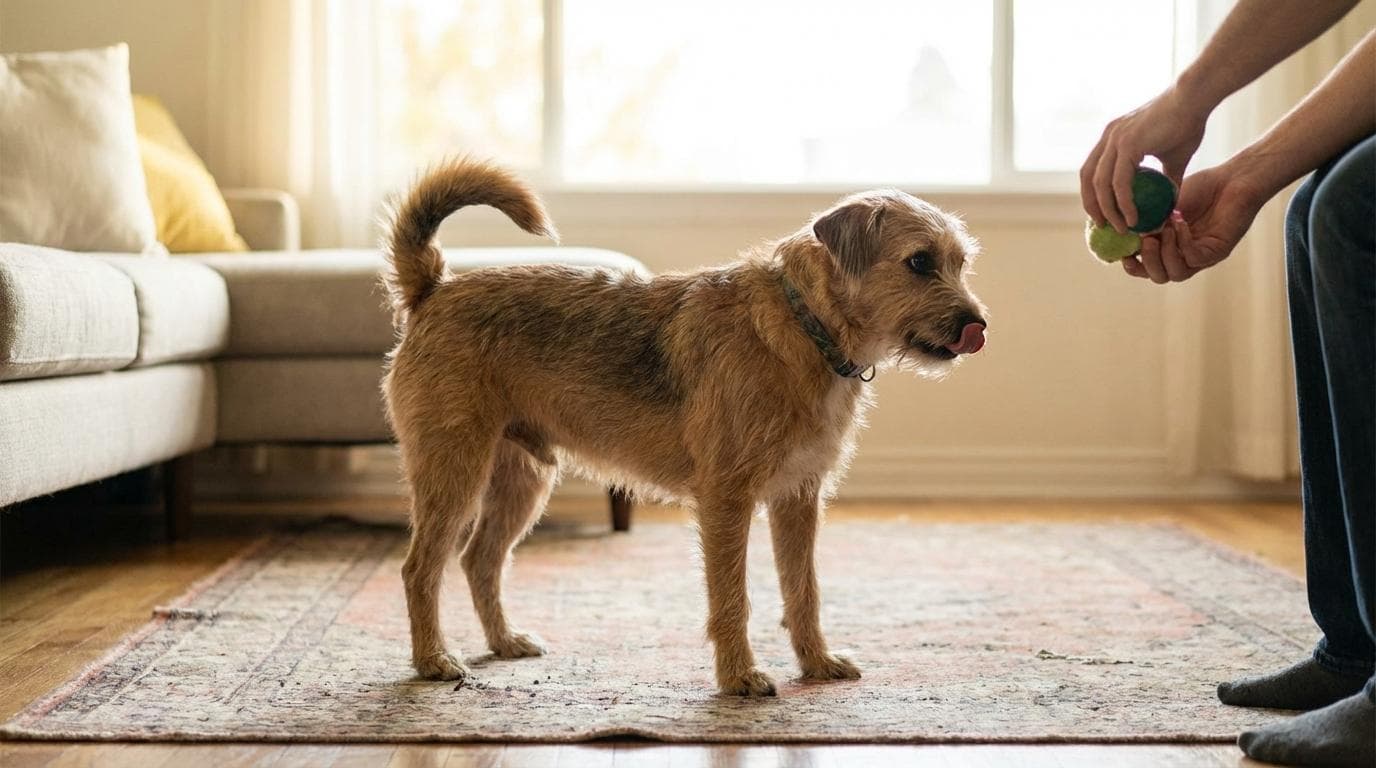
Your dog is talking to you every single second of every single day. The problem is, most owners are listening to the wrong channel. They watch the tail and assume wagging means happy. They see a yawn and assume their dog is tired. They notice a lip lick and think their dog just tasted something interesting.
These misreadings aren't harmless. Every time you misinterpret a stress signal as contentment, you're missing a chance to help your dog before a behavior problem develops. Dogs who feel unheard escalate. The lip lick becomes a growl. The yawn becomes avoidance. The stiff wag becomes a snap.
Understanding your dog's body language is the single most powerful tool you have as an owner. It costs nothing, requires no equipment, and can prevent nearly every common behavioral issue before it starts. Here are 12 signals most owners get wrong.
1. The Tail Wag That Doesn't Mean Happy
This is the most dangerous misreading in dog ownership. A wagging tail does not automatically mean a happy dog. Tail position and speed matter enormously. A slow wag held high and stiff often signals alertness, arousal, or even a warning. A low, fast wag typically indicates insecurity or appeasement. A loose, wide wag at mid-height with the whole body wiggling — that's the happy wag you're looking for.
Research from the University of Trento found that dogs even wag asymmetrically: rightward wags correlate with positive emotions, leftward wags with negative ones. The direction is subtle, but the tail position is not. If your dog's tail is flagging high and rigid while wagging, they are aroused, not relaxed. This distinction matters most when your dog is meeting new dogs or people.
2. Yawning Under Stress
Dogs yawn when they're tired, yes. But they also yawn as a displacement behavior when they're stressed, uncomfortable, or conflicted. A stress yawn tends to be wider, more exaggerated, and occurs in situations where sleep makes no sense — at the vet's office, when a stranger reaches toward them, during a tense interaction with another dog.
If your dog yawns repeatedly in a social or novel situation, they're telling you they're overwhelmed. This is especially common in dogs with the Anxious Guardian behavioral pattern, who are constantly monitoring their environment for threats and rarely feel safe enough to truly relax.
3. Lip Licking and Tongue Flicks
A quick tongue flick — the tongue darting out and licking the nose or lips — is one of the earliest and most reliable stress signals in dogs. Norwegian behaviorist Turid Rugaas identified this as a "calming signal," a behavior dogs use to de-escalate tension in themselves and others.
Watch for lip licking when your dog is being handled, when they're in a new environment, or when another dog or person approaches. It often appears before more obvious signs of discomfort, making it an early warning system if you know what to look for.
4. The "Guilty" Look
Your dog did not eat the couch cushion and then feel remorse about it. The "guilty look" — lowered head, averted eyes, tucked tail — is an appeasement display triggered by your body language and tone of voice, not by any understanding of wrongdoing.
Research by Alexandra Horowitz at Barnard College demonstrated this conclusively: dogs showed the "guilty look" when scolded regardless of whether they had actually done anything wrong. They were responding to their owner's displeasure, not reflecting on their own behavior. Misinterpreting this as guilt can lead owners to punish dogs who are already anxious, worsening the underlying behavior problem.
5. Whale Eye (Showing the Whites)
When a dog turns their head away but keeps their eyes fixed on something, you'll see a crescent of white sclera around the iris. This is called "whale eye" and it's a clear signal of discomfort, anxiety, or guarding behavior. You'll often see it when a dog is protecting a resource — food, a toy, a resting spot — or when they're being touched in a way that makes them uneasy.
Whale eye is a direct communication: the dog is uncomfortable but hasn't escalated yet. Respect it. If your dog shows whale eye when you approach their food bowl, you're seeing the early stage of resource guarding, which is far easier to address now than after it becomes a growl or a snap.
6. The Play Bow That Isn't Play
The classic play bow — front end down, rear end up — usually signals an invitation to play. But context matters. Some dogs use the play bow position as a displacement behavior or as a way to create distance. If the bow is stiff, brief, and followed by avoidance or a hard stare rather than bouncy movement, the dog isn't playing — they're conflicted.
Dogs with the Overstimulated Hunter archetype sometimes display frantic bowing mixed with barking and lunging. This isn't playful energy — it's arousal that the dog can't regulate, and it needs to be managed before it escalates.
7. Freezing in Place
A dog who suddenly becomes very still is a dog you should pay close attention to. Freezing is a precursor to a decision: the dog is assessing whether to flee, fight, or appease. In the context of resource guarding, freezing over a food bowl or toy is a warning that the dog is prepared to escalate if the perceived threat continues.
Many bite incidents are preceded by a freeze that the owner didn't recognize as a warning. The dog froze, the person continued approaching, and the dog escalated to a snap or bite because their earlier signal was ignored.
8. Raised Hackles
Piloerection — the hair standing up along a dog's back and shoulders — is an involuntary response, similar to goosebumps in humans. It indicates arousal, but arousal is not the same as aggression. A dog's hackles can rise from excitement, fear, curiosity, or uncertainty.
The pattern of piloerection can tell you more. Hair standing up only at the shoulders often indicates confidence or forward arousal. Hair raised along the entire back from shoulders to tail base often indicates fear or ambivalence. Either way, the dog is in a heightened emotional state and should be managed carefully.
9. Turning Away or Averting Gaze
When your dog turns their head or body away from a person, dog, or situation, they're communicating discomfort and asking for space. This is another of Rugaas's calming signals, and it's one of the most frequently ignored. Owners often interpret this as distraction or disinterest, but it's active communication.
Dogs who consistently turn away from approaching strangers are telling you they don't want that interaction. Forcing it — "Oh, he's friendly, just let them say hi" — overrides your dog's attempt to communicate, teaches them that their signals don't work, and can lead to more dramatic behaviors like growling or snapping as they search for a signal you'll actually listen to.
10. Panting Without Exertion
Dogs pant to cool down after exercise. That's normal thermoregulation. But panting in a cool environment without physical exertion is often a sign of stress or anxiety. Stress panting tends to look different from heat panting — it's often faster, shallower, and may be accompanied by a tight, retracted mouth rather than a relaxed, open one.
If your dog pants heavily in the car, at the vet, or when guests arrive, they're likely experiencing anxiety. This is particularly common in dogs who carry Velcro Shadow traits, who become deeply distressed when their routine is disrupted or their person is out of reach.
11. Shaking Off When Not Wet
You've seen this: your dog does a full body shake as if they just got out of the bath, but they're completely dry. This "shake-off" is a reset behavior. Dogs use it to literally shake off tension after a stressful interaction or situation. It often happens after meeting a new dog, after being handled at the vet, or after a moment of conflict.
The shake-off is actually a healthy coping mechanism. It tells you the dog experienced stress and is processing it. Pay attention to what happened just before the shake — that's the stressor your dog is recovering from.
12. Leaning In vs. Leaning Away
A dog who leans into you during petting is seeking contact and comfort. A dog who leans away, even slightly, is communicating that the interaction is unwelcome. The subtlety of this signal is why it's so often missed. The lean-away might be just a slight shift of weight, but it's intentional communication.
Pay particular attention when children or strangers pet your dog. Many dogs tolerate handling without enjoying it, and the lean-away is their polite request for the interaction to stop. Honoring this request builds trust. Ignoring it erodes it.
Putting It All Together
No single signal tells the whole story. Body language is read in clusters and in context. A yawn by itself might just be a tired dog. A yawn combined with lip licking, whale eye, and a stiff body is a dog who is deeply uncomfortable and approaching their threshold.
The better you get at reading these signals, the more proactive you can be. Instead of reacting to your dog's outbursts, you'll see the warning signs minutes before they happen. You'll remove your dog from stressful situations before they escalate. You'll build trust by proving to your dog that their communication works — that when they tell you they're uncomfortable, you listen.
Every dog has a unique behavioral pattern that shapes how they communicate and what stresses them most. Take the free Dog Archetype Quiz to discover your dog's specific archetype and learn exactly which signals to watch for in your dog's daily behavior.