Resource guarding is one of the most misunderstood dog behaviors owners encounter. You reach toward your dog's food bowl or try to take a toy, and suddenly your usually gentle companion is growling, stiffening, or snapping. It feels like aggression out of nowhere. It feels personal.
But dog resource guarding is not a character flaw. It is a deeply instinctual survival behavior rooted in insecurity, and once you understand what is driving it, you have a clear path to making it better.
What Resource Guarding Actually Is
Resource guarding is when a dog uses threatening behavior -- growling, lunging, snapping, or stiff posturing -- to keep people or other animals away from something it values. That something can be food, treats, toys, a resting spot, a stolen sock, or even a particular person.
In the wild, controlling resources meant survival. A dog that held onto food was a dog that ate. Evolution wired this behavior into the canine brain deeply, and domestication has not erased it. Some dogs carry these instincts more strongly than others, and the fearful-fighter dog tends to guard most intensely because their relationship with the world is already one of uncertainty.
When they have something valuable, they hold on for dear life. Approaching while they have it feels genuinely threatening. This is why punishment makes resource guarding worse. A dog that is already afraid is not going to become less afraid because you scared them more.
Common Triggers
Resource guarding tends to cluster around predictable situations:
- Food bowls during meal time
- High-value chews and treats like bully sticks, rawhide, or marrow bones
- Stolen items -- socks, food wrappers, tissues that smell like food
- Resting spots including beds, couches, and specific corners of a room
- Toys during play, especially during tug
- Another dog or person approaching while they have something particularly valued
Reading the Warning Signals
Before a dog snaps, they almost always communicate discomfort. Most owners miss these early signals entirely:
- Eating faster suddenly, speed-eating over the bowl
- A whale eye -- showing the whites of their eyes while keeping the head low
- Hard, rigid body posture that replaces normal fluid movement
- A low grumble that barely makes sound
- Moving the item to a corner and turning away from the room
- Hovering over the item without eating or playing with it
Why Confrontation Makes This Worse
The outdated approach to resource guarding was to confront it directly. Stare the dog down. Make them submit. Take the item while they growl until they give up.
This backfires badly in practice. You are teaching a dog that already feels insecure that the world confirms their fear. People who approach when they have something valuable are a threat. You may suppress the growl temporarily, but you have not changed how they feel. Worse, a dog that learns to suppress growling before snapping is a genuinely more dangerous dog -- they have learned to skip the warning.
Real change comes from changing the emotional association, not forcing compliance.
The Trade Game: Your Core Training Tool
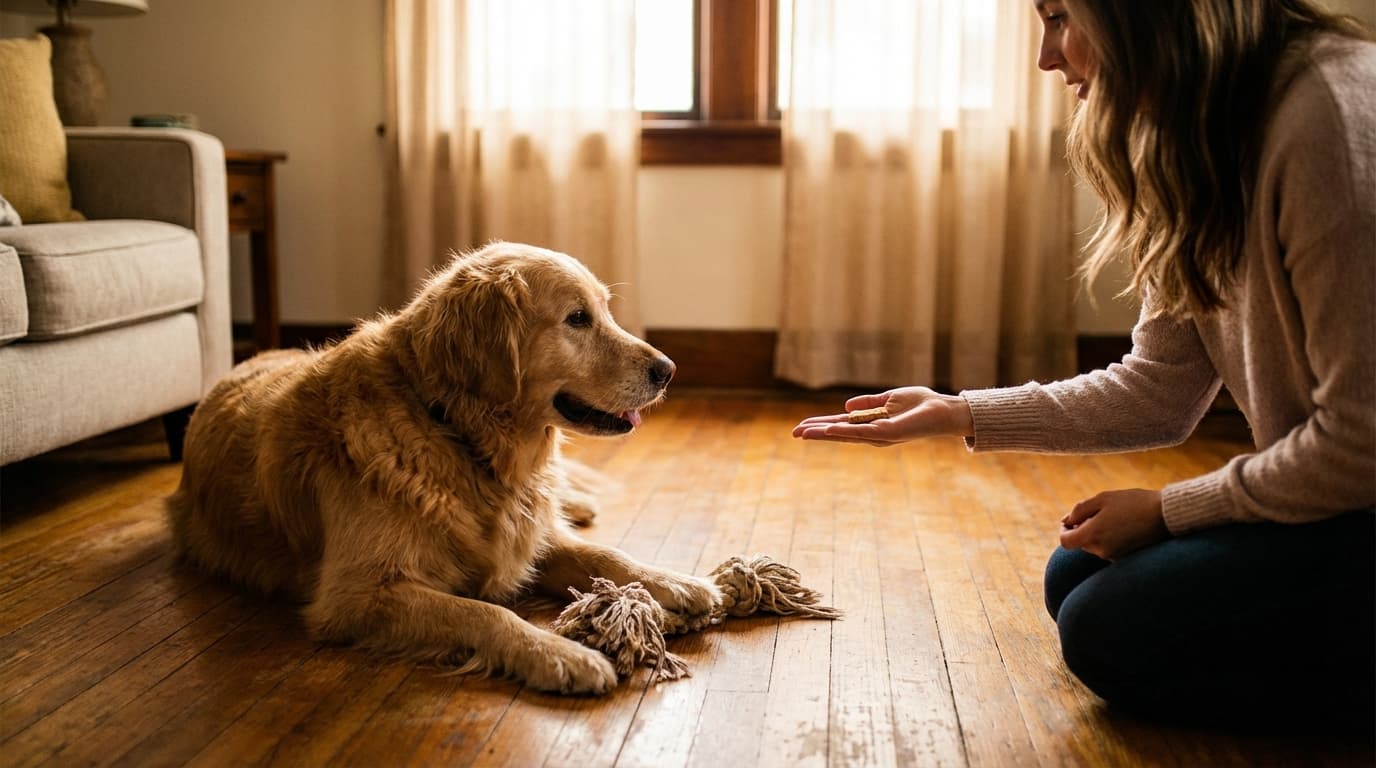
The most effective starting point for resource guarding is teaching a reliable trade cue. The logic is straightforward: you approach with something better, the dog voluntarily gives up what they have, and good things happen.
Start with low-stakes items -- not the bone they would fight over, but a toy they enjoy without obsessing over.
- Approach calmly with a high-value treat: a small piece of chicken, a bit of cheese
- Say "trade" in a neutral, matter-of-fact tone
- Hold the treat near their nose -- not above their head, not fast
- When they drop the item to take the treat, pick up the item, praise quietly, then give it back
Once the trade is reliable on low-value items, gradually work toward higher-value ones. The curve of progress is slow, but each successful trade slightly reduces the anxiety that drives the behavior.
Building an Environment That Reduces Guarding
Beyond active training, environment plays a significant role. Fearful-fighter dogs guard more intensely when they feel resource scarcity -- even when you objectively provide plenty.
Adjustments that reduce baseline guarding:
- Feed meals in a quiet, consistent spot where they will not be disturbed mid-bowl
- Give high-value chews in a separate space, especially in multi-dog homes
- Avoid taking items away just to practice -- unnecessary repetitions create chronic stress without training benefit
- In multi-dog households, multiple water stations and feeding areas reduce competition
- Avoid hovering while they eat -- sustained proximity over the bowl registers as pressure
Children and Resource Guarding: Non-Negotiable Safety Steps
Resource guarding in homes with children requires specific attention that cannot wait for training to complete. Children move fast, reach suddenly, and cannot read warning signals reliably.
Management while training is in progress:
- Feed guarding dogs behind a baby gate or in a separate room during meal times
- Put high-value chews away when children are present unless an informed adult is supervising with full attention
- Teach children that leaving the dog alone while eating is a non-negotiable household rule
When to Seek Professional Help
Most mild to moderate resource guarding can be addressed at home with consistent trade game practice and environmental adjustments. Some situations require professional assessment:
- The dog has made contact with a family member
- Guarding is happening across many different contexts simultaneously
- The dog is guarding people -- standing over someone and growling at others who approach
- You are uncertain whether what you are seeing is guarding or a different form of aggression
Understanding Your Dog's Emotional Starting Point
If your dog guards resources, the most important reframe is this: they are not trying to dominate you. They are not being spiteful. They are scared of losing something valuable in a world that does not feel fully secure.
The quiz can help you identify whether your dog fits the fearful-fighter archetype and which specific approaches will land best for their emotional profile. Resource guarding is almost always one piece of a larger picture -- and once you see that picture clearly, your dog's behavior makes complete sense.
Dogs who feel genuinely secure in their environment, who trust that good things come reliably and that trades lead to more good things, guard less. Not because you forced them to stop -- but because the underlying anxiety had less to feed on.