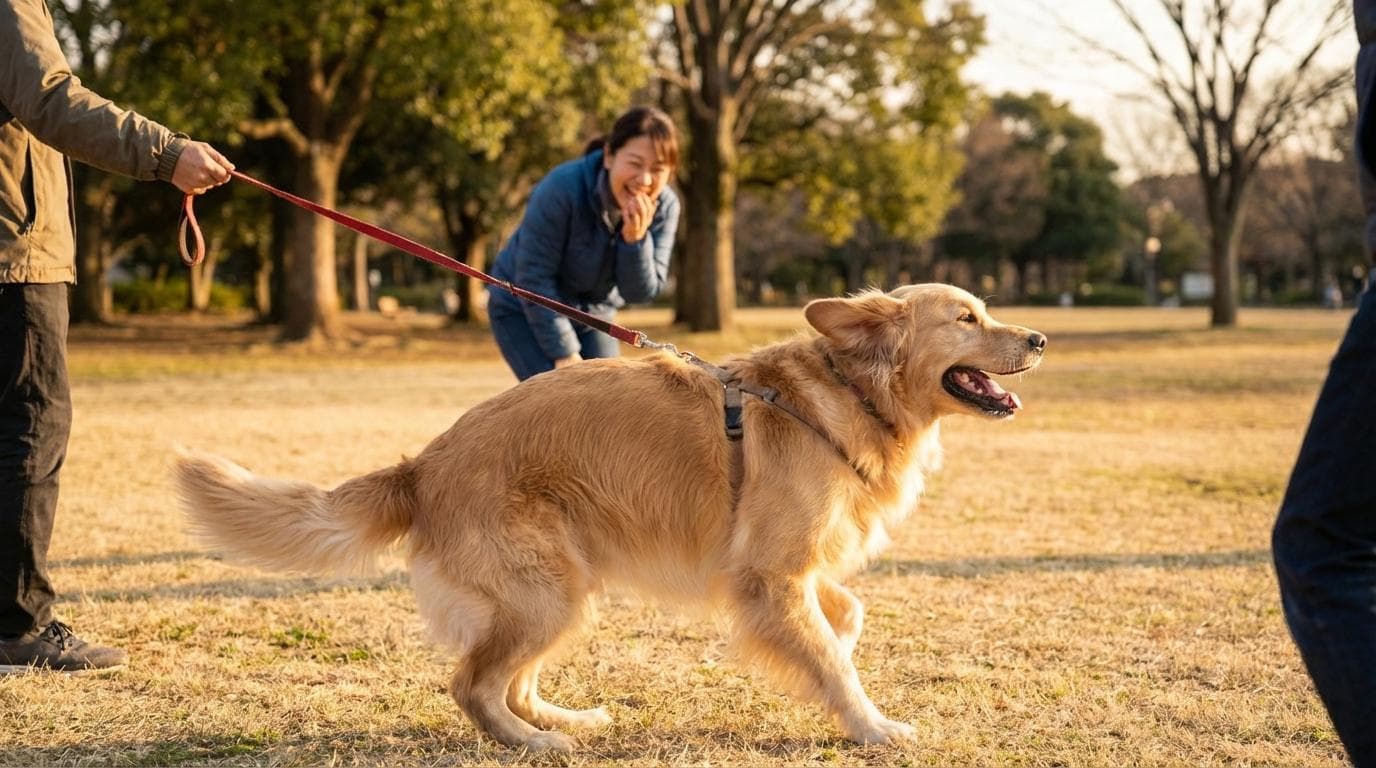
It’s a familiar scene: You’re out for a walk with your beloved dog, enjoying the fresh air. Then, in the distance, you spot another person, a child on a bike, or – gasp – another dog. Your dog’s ears perk up. Their tail starts to wag. A low whine might escape. Before you know it, your dog is transformed from a calm companion into a lunging, barking, pulling, chaotic mess at the end of the leash, desperate to say hello.
You love that your dog is so friendly, so eager to make new friends. But this isn't friendly; it's frustrating, embarrassing, and often, it feels completely out of control. You might even find yourself avoiding walks at certain times or crossing the street every time you see someone approaching. If this sounds like your daily reality, you're not alone. You’re likely living with a "Frustrated Greeter."
The Frustrated Greeter: More Than Just Being "Too Friendly"
The Frustrated Greeter is one of the five core Dog Archetypes we've identified at DogArchetype.com, alongside the Anxious Guardian, Overstimulated Athlete, Under-socialized Protector, and Fearful Reactor. This archetype describes a dog whose overwhelming desire to interact with people, other dogs, or even novel objects (like skateboards or strollers) manifests as an out-of-control, often disruptive, display.
It’s easy to dismiss this behavior as your dog being "too friendly" or just "overexcited." While enthusiasm is certainly a component, it’s crucial to understand that beneath the seemingly friendly frenzy often lies a powerful cocktail of high arousal, underdeveloped impulse control, and genuine frustration. Your dog isn't being bad; they’re trying their best to communicate an intense desire, and they simply don't have the tools to do it appropriately. They are, in essence, overwhelmed by their own emotions.
What Does a Frustrated Greeter Dog Look Like?
You’ll recognize these scenarios all too well:
* The Leash Lunge: The classic sign. Your dog spots a person or dog, and despite your best efforts, they launch themselves forward, straining against the leash, often choking themselves in the process. They might emit a frantic, high-pitched bark or whine.
* The Spinning Dervish: Before or during the lunge, your dog might spin in circles, leap into the air, or perform excited "zoomies" on the spot, unable to contain their anticipation.
* The Barking Barrage: Not an aggressive bark, but an insistent, demanding, often high-pitched bark that seems to say, "HEY! LOOK AT ME! COME HERE!" This often escalates the longer they are prevented from greeting.
* The Ignoring of Cues: In these moments, your dog seems to go deaf. All your "leave it," "sit," or "look at me" commands vanish into thin air, replaced by an intense focus on the object of their desire.
The "Friendly" Nipping/Jumping: If they do* get to greet, their enthusiasm might spill over into jumping all over the person, mouthing hands, or even a little "play nipping" – all signs of over-arousal rather than calm, polite interaction.
* The Post-Greeting Meltdown: After a chaotic greeting, your dog might still be wired, panting heavily, and find it hard to settle back into their walk.
These behaviors aren't malicious. Your dog genuinely wants to connect. But their internal experience of that desire is so intense that it overrides their ability to think, listen, and behave calmly. This is why your dog lunges to greet – it’s a desperate attempt to bridge the gap between their desire and the perceived barrier.
Why Is Your Dog a Frustrated Greeter? Unpacking the Causes
Understanding the root causes of this behavior is the first step toward helping your dog. It's rarely just one thing, but rather a combination of factors.
Over-Arousal and Under-Impulse Control
Imagine wanting something so badly it feels like an itch you can’t scratch. For your dog, the sight of a potential friend triggers a massive surge of adrenaline and excitement. This is over-arousal. When they lack the coping mechanisms or training to manage this intense feeling, it manifests as chaos. Their impulse to go now is stronger than their ability to pause and think. This is particularly common in highly energetic breeds or dogs with a strong "go-go-go" personality.
Learned Behavior and Reinforcement
Every time your dog lunges, barks, or pulls and eventually gets to greet, even if it’s just for a second, the behavior is reinforced. Your dog learns: "If I act crazy enough, I eventually get what I want!" Even if you pull them away, the anticipation of the greeting can be self-reinforcing. They might also be reinforced by the attention they get – even negative attention like you yelling their name can be a form of attention. The act of pulling and releasing tension can also be self-reinforcing, providing a physical outlet for their pent-up energy.
Lack of Appropriate Outlets
Many Frustrated Greeters are high-energy dogs who aren't getting enough appropriate mental and physical stimulation. A bored dog with pent-up energy is more likely to explode with excitement at the sight of novelty. If their primary "excitement outlet" is greeting other dogs and people, they will naturally seek it out with intense fervor. This isn't just about walks; it's about puzzle toys, training sessions, scent work, and other activities that tire their brains as well as their bodies.
Underlying Stress or Anxiety (Even in "Friendly" Dogs)
While it seems counterintuitive, some Frustrated Greeters might actually be experiencing a subtle form of anxiety. The intense desire to greet could stem from a slight insecurity about social interactions, where the frantic approach is a way to control the situation or initiate contact before they are approached. Or, the frustration itself can be stressful. The constant push-pull, the inability to get what they want, can lead to chronic low-level stress, which then fuels the over-arousal cycle.
The Impact on You and Your Dog
Living with an overexcited dog meeting people can take a toll on both of you.
* Your Stress Levels: Walks become a source of anxiety instead of enjoyment. You might feel embarrassed, judged by others, or even angry at your dog. This stress can create a negative feedback loop, making your dog more reactive.
* Your Dog's Well-being: While they seem happy in the moment, constant frustration and over-arousal are not healthy states for your dog. It prevents them from truly relaxing and enjoying their surroundings. They are often living in a state of hyper-vigilance, constantly scanning for the next exciting thing.
* Safety Concerns: A dog lunges to greet can accidentally pull you over, get tangled with another dog, or frighten a child. It can also lead to negative interactions with other dogs or people who misunderstand your dog's intentions.
* Limited Social Opportunities: You might stop taking your dog to parks, cafes, or even on walks during busy times, limiting their exposure to the world and potentially exacerbating their frustration.
It's time to break this cycle and teach your frustrated greeter dog how to manage their emotions and greet politely.
Practical Solutions: Helping Your Frustrated Greeter
Helping your dog isn't about stopping them from being friendly; it's about teaching them how to be friendly in a calm, controlled, and appropriate way. This requires a multi-faceted approach focusing on management, training, and meeting your dog's core needs.
1. Management Strategies: Preventing Rehearsal
The most immediate step is to prevent your dog from practicing the unwanted behavior. Every time your dog lunges and barks, they get better at it.
* Avoid Triggers: Temporarily adjust your walk routes and times to avoid peak hours or areas where you know you'll encounter many triggers. It's not forever, just while you build new skills.
* Increase Distance: The closer your dog is to a trigger, the harder it is for them to control themselves. Cross the street, turn around, or create as much distance as possible the moment you spot a potential trigger.
Use a Management Tool: A front-clip harness or a head halter can give you more control and make it harder for your dog to lunge, preventing them from reinforcing the pulling behavior. Always introduce these tools positively and gradually.*
* "Engage-Disengage" Game: If you spot a trigger at a distance, immediately start feeding your dog high-value treats (think cooked chicken or cheese) as long as the trigger is visible and your dog is calm. The moment the trigger disappears, stop the treats. This teaches your dog: "Trigger appears = good things happen to me (treats) while I stay calm."
2. Training Core Skills: Building a Foundation for Calmness
Management buys you time; training builds the skills your dog needs for long-term success.
#### Building Calmness and Focus
* Relaxation Protocol/Mat Work: Teach your dog to settle on a mat or bed in various environments. Start in a quiet room, then gradually introduce mild distractions. Reward heavily for staying on the mat. This builds an "off switch."
* "Look At Me" Cue: Teach your dog to make eye contact with you on cue. Start in a quiet place, hold a treat by your nose, say "Look at me," and reward when they make eye contact. Gradually add distractions. This is your go-to when a trigger appears.
* Duration Stays: Practice "sit" or "down" stays for increasing periods of time and with increasing distractions. This builds impulse control.
#### Teaching an Alternative Behavior
Instead of lunging, what do you want your dog to do?
* "Touch" or Hand Target: Teach your dog to touch their nose to your hand. This is a great redirecting behavior. When a trigger appears, ask for a "touch," reward, and move away.
* "Find It" Scattered Treats: When a trigger appears, scatter a handful of high-value treats on the ground for your dog to sniff out. This engages their nose, a calming activity, and distracts them from the trigger.
* Automatic Sit/Watch: Train your dog that when they see a person or dog, they should automatically sit and look at you. Reward this heavily.
#### Practicing Leash Skills in Low-Distraction Environments
Your dog can't perform well in a chaotic environment if they haven't mastered basic skills in easy ones.
* Loose Leash Walking: Practice walking politely on a leash in your living room, then your yard, then a quiet street, gradually increasing distractions. Reward frequently for a loose leash.
* U-Turns: If your dog starts to pull, immediately turn and walk in the opposite direction. Your dog learns that pulling doesn't get them forward; a loose leash does.
3. Meeting Needs: Enrichment and Exercise Beyond Greetings
A well-exercised and mentally stimulated dog is a calmer dog.
* Physical Exercise: Ensure your dog gets enough breed-appropriate physical activity. This isn't just about walks; it could be fetch, running, swimming, or structured play.
* Mental Enrichment: This is often overlooked. Provide puzzle toys, snuffle mats, chew items, and opportunities for scent work. Training sessions (even short ones) are also excellent mental workouts. A tired brain is often more effective than just a tired body.
* Structured Play: If your dog enjoys playing with other dogs, ensure these interactions are calm and supervised, not just free-for-all chaos. Quality over quantity.
4. Advocacy: Being Your Dog's Best Friend
You are your dog's advocate. Don't be afraid to politely decline greetings if your dog isn't ready. A simple "We're in training right now, thanks!" or "My dog isn't greeting today" is perfectly acceptable. Protect your dog from overwhelming situations that reinforce their frustrated behaviors.
When to Seek Professional Help
If you've been consistently implementing these strategies
Further Reading
For more expert guidance on this topic, check out these trusted resources: