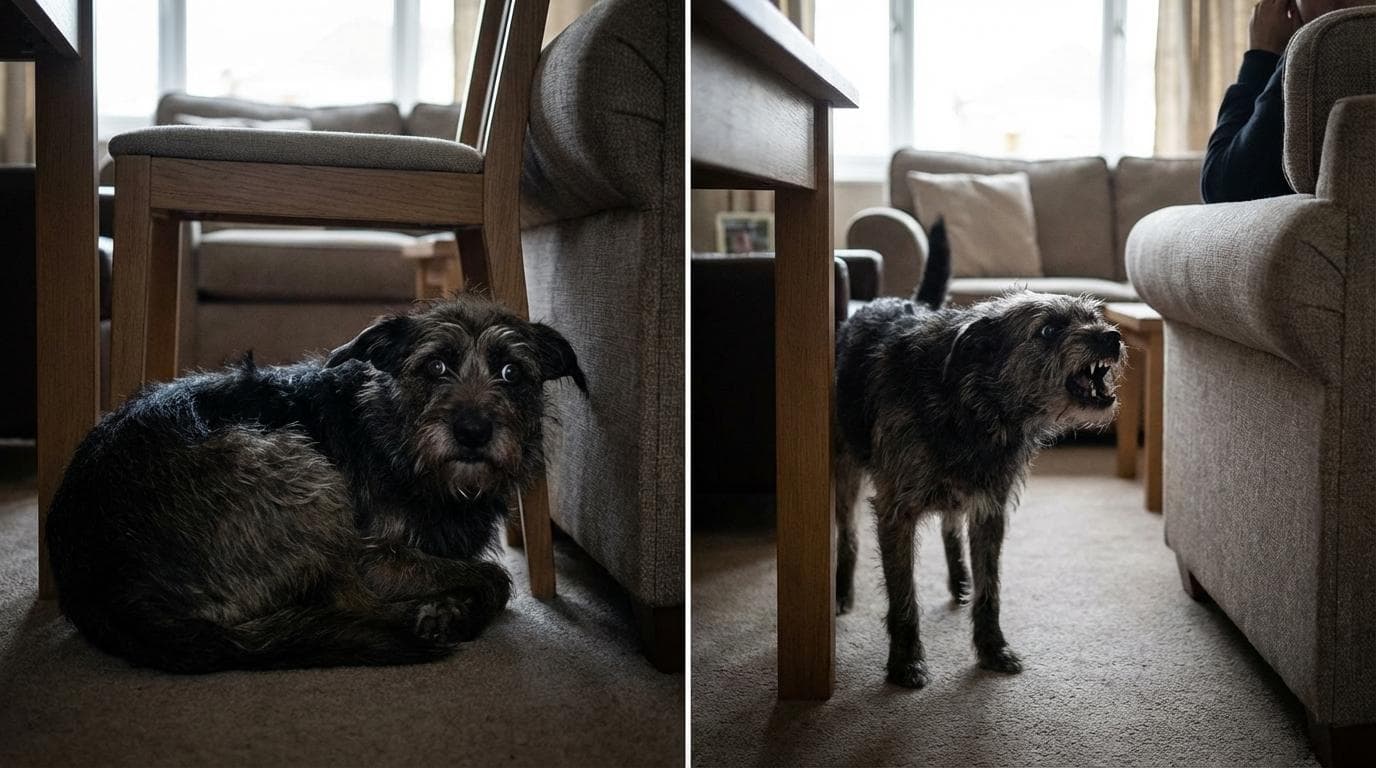
You’ve likely found yourself in a frustrating, perhaps even frightening, situation. Your beloved dog, the one you adore, sometimes acts in ways that alarm you. Maybe they bark and lunge at other dogs on walks, snap at visitors, or growl when you try to move them. It’s easy to label these behaviors as "aggression," and feel confused, embarrassed, or even like you’ve failed. But what if we told you that, more often than not, what looks like aggression is actually a desperate plea for help rooted in fear?
This isn't just semantics; understanding whether your dog is aggressive or just scared is the crucial first step toward truly helping them. It changes everything about how you perceive their behavior and, more importantly, how you respond. When you learn to read the subtle (and not-so-subtle) signs of fear, you unlock a path to building confidence, trust, and a happier, safer life for your furry friend.
Understanding the Core Difference: Dog Aggression vs Fear
Let's be clear: true, unprovoked aggression in dogs is rare. When a dog exhibits what we perceive as aggressive behaviors – barking, growling, lunging, snapping, or biting – there is almost always an underlying reason. And for a vast majority of dogs, that reason is fear.
Think of it this way: aggression is a behavior, while fear is an emotion that often drives that behavior. A truly aggressive dog might seek out confrontation, showing confidence and intent to harm. A fearful dog, on the other hand, is usually trying to create distance, make a perceived threat go away, or signal that they are uncomfortable and need space. Their "aggression" is a defensive strategy, a desperate attempt to protect themselves when they feel cornered or overwhelmed.
The distinction is critical because it dictates your approach. Punishing a truly aggressive dog might suppress the behavior temporarily, but it won't address the root cause. Punishing a fearful dog, however, will only intensify their fear, erode trust, and potentially make their defensive reactions more severe and unpredictable. Your dog isn't being "bad" or "dominant"; they're saying, "I'm scared, and I don't know what else to do."
Decoding Your Dog's Body Language: Signs of Fear
Dogs communicate primarily through body language. Learning to read these signals is like learning a new language – and it's essential for understanding your dog's emotional state. When considering dog aggression vs fear, paying close attention to their non-verbal cues is paramount.
Subtle Signs You Might Be Missing
Often, dogs give many subtle warnings before resorting to more overt displays. These are your dog's early whispers of discomfort:
* Lip Licking (out of context): If your dog licks their lips when there's no food around, especially in a stressful situation, it's often a sign of anxiety or appeasement.
* Yawning (out of context): Similar to lip licking, a yawn when your dog isn't tired can indicate stress.
* Whale Eye: This is when you can see the whites of your dog's eyes, usually around the outer edges, because they are looking away from something but turning their head slightly. It signals tension and discomfort.
* Averted Gaze/Head Turn: Your dog might avoid eye contact or turn their head away from something that makes them uncomfortable.
* Ears Back/Flattened: Ears pinned back against the head are a classic sign of fear or submission.
* Low Tail Wag or Tucked Tail: While a wagging tail usually indicates happiness, a low, stiff, or tucked tail with a quick, shallow wag often signals anxiety or fear. A tail tucked tightly between the legs is a clear sign of intense fear.
* Stiff Body/Freezing: Your dog might suddenly become very still, rigid, and tense. This "freeze" response is a common fear strategy, hoping the threat will pass if they don't move.
* Trembling/Shaking: Even in warm weather, trembling can indicate extreme fear or anxiety.
* Paw Lifts: Lifting one front paw can be a subtle sign of uncertainty or apprehension.
* Hiding/Trying to Escape: Your dog might try to get behind you, under furniture, or pull away from a situation.
* Urination/Defecation: In extreme cases of fear, a dog might lose bladder or bowel control, often called "submissive urination."
Overt Displays of Fearful Dog Behavior
When subtle signals are ignored, or your dog feels their space is being invaded, these behaviors escalate. These are the "shouts" that are often misinterpreted as pure aggression:
* Barking and Lunging: If your dog barks and lunges at people, other dogs, or even objects, but then quickly retreats or tries to create distance if the "threat" doesn't back off, it’s highly likely to be fearful dog behavior. They're trying to scare away what they perceive as dangerous.
* Growling: A growl is a critical warning signal. It means, "I'm uncomfortable, I need space, and if you don't listen, I might have to escalate." It's a defensive communication, not an offensive one. Never punish a growl, as it's your dog's way of telling you they're nearing their breaking point.
* Snapping/Air Snapping: This is often the next step after growling. A snap is a warning bite that doesn't make contact or barely nips. It's a clear "back off!" message.
* Biting: A bite, especially one that is quick and then the dog retreats, is a last resort. It happens when all other attempts to create distance or communicate discomfort have failed, and your dog feels they have no other option for self-preservation. This is the peak of dog fear aggression.
* Resource Guarding: While it can have other roots, resource guarding (protecting food, toys, or even their space) often stems from insecurity and fear of losing something valuable.
When Fear Morphs into Dog Fear Aggression
It’s a natural progression: when a dog is consistently fearful and their attempts to communicate discomfort are ignored or ineffective, they learn that more intense displays are necessary to achieve safety. This is how fear morphs into dog fear aggression.
Imagine your dog is on a leash and sees another dog approaching. They might start with subtle signs – lip licking, averting gaze. If the other dog keeps approaching and you don't intervene to create distance, your dog might escalate to a stiff body, then a low growl. If the other dog still doesn't back off, or you pull your dog closer, they might feel trapped. At this point, their "fight or flight" instincts kick in. If "flight" (getting away) isn't an option, they'll resort to "fight" – barking, lunging, snapping, or biting. This isn't because they want to fight, but because they feel they have to in order to survive the perceived threat.
This escalation is often exacerbated by "trigger stacking." This occurs when your dog experiences multiple stressors in a short period. A loud noise, followed by an uncomfortable interaction with a stranger, then encountering another dog, can push a fearful dog past their threshold. The last trigger, even a minor one, can lead to an explosive reaction that seems out of proportion to the immediate event.
Dogs who exhibit this type of behavior often fall into the "Fearful Reactor" archetype – dogs who react strongly to perceived threats due to underlying anxiety and a lack of confidence. They might also be an "Anxious Guardian" who feels the need to protect their family, even if it means reacting aggressively out of fear.
Identifying Triggers and Context
To truly help your dog, you need to become a detective. What specific situations, people, objects, or environments consistently elicit your dog's fearful reactions? Understanding these triggers and the context in which they occur is paramount for effective scared dog training.
Common Triggers for Fear-Based Reactions
* Specific People: Your dog might react to men, children, people wearing hats, uniforms, or carrying umbrellas. It could be specific body language, height, or sound that triggers their fear.
* Other Dogs: Some dogs are fine with small dogs but not large ones, or vice versa. They might react to high-energy dogs, intact males, or even just the sight of another dog on leash.
* Noises: Thunderstorms, fireworks, vacuum cleaners, construction noises, or even certain household appliances can be terrifying.
* New Environments or Confined Spaces: A new vet office, a busy park, a crowded elevator, or even a small room can overwhelm a fearful dog.
* Being Touched Unexpectedly: A hand reaching over their head, a hug, or an unexpected pat can trigger a defensive reaction, especially if they have a history of pain or negative experiences with touch.
* Resource Management: If your dog growls when you approach their food bowl, bed, or a favorite toy, it's often rooted in a fear of losing that resource, not true aggression.
The Role of Socialization (or Lack Thereof)
A lack of proper, positive socialization during crucial developmental periods (roughly 3-16 weeks) can significantly contribute to fearful dog behavior. Dogs who weren't exposed to a wide variety of sights, sounds, people, and other dogs in a safe and positive way might develop anxieties later in life. This is often seen in dogs who fit the "Under-Socialized Protector" archetype, where their protective instincts are amplified by a lack of positive early experiences.
Practical Strategies for Scared Dog Training
Once you've identified the signs and triggers, you can start to implement strategies for scared dog training. Remember, patience, consistency, and positive reinforcement are your most powerful tools. Your goal is to change your dog's emotional response to triggers from fear to neutrality or even positive anticipation.
Creating a Safe and Predictable Environment
* Establish a Safe Space: Provide your dog with a den-like crate or a cozy bed in a quiet corner of your home where they can retreat and feel secure. Never bother them when they are in their safe space.
* Predictable Routine: Dogs thrive on routine. A consistent schedule for feeding, walks, and potty breaks can reduce anxiety.
* Management is Key: Initially, the most effective strategy is to prevent your dog from being exposed to their triggers. This might mean walking at different times, avoiding busy areas, or asking guests to give your dog space. Management isn't a cure, but it stops the rehearsing of unwanted behaviors and prevents your dog from being pushed past their threshold.
Building Confidence Through Positive Reinforcement
* Reward Calm Behavior: Actively look for moments when your dog is calm and relaxed, especially around potential triggers (even if they are far away). Mark and reward these moments with high-value treats and praise.
* Engage in Fun Training Games: Training simple commands like "sit," "stay," "come," and "touch" in a low-stress environment builds confidence and strengthens your bond. Keep sessions short, fun, and always end on a positive note.
* Desensitization and Counter-Conditioning: This is the cornerstone of fearful dog training.
* Desensitization: Gradually exposing your dog to their trigger at a distance or intensity where they show no fear.
* Counter-Conditioning: Changing your dog's emotional response to the trigger by pairing it with something positive (like delicious treats). For example, if your dog is afraid of strangers, start by having a stranger stand far away, just within sight, and give your dog treats. As the dog remains calm, the stranger can gradually get closer over many sessions, always pairing their presence with treats. The goal is for your dog to associate the stranger with good things. The "Look at That" game is a great application of this.
* "Look at That" Game: When your dog looks at a trigger, say "yes!" and immediately give them a treat. The moment they look away from the trigger and back at you, give another treat. This teaches them to look at the trigger calmly and then
Further Reading
For more expert guidance on this topic, check out these trusted resources: