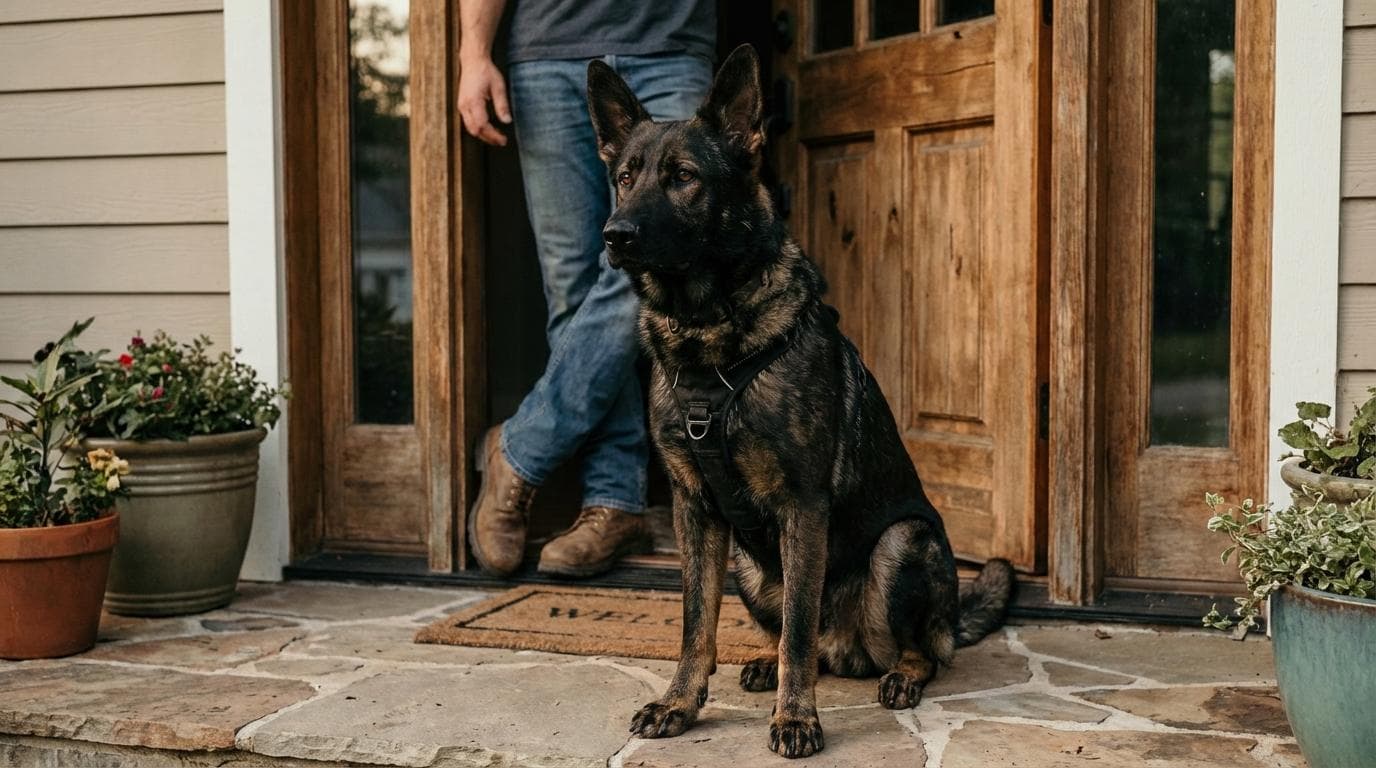
It’s a familiar scenario for many dog owners: you love your furry companion fiercely, but sometimes their behavior leaves you scratching your head, feeling frustrated, or even embarrassed. Perhaps your dog barks relentlessly at guests, growls when someone gets too close to you, or seems constantly on edge, like a furry sentinel always on duty. You might describe them as "protective," "nervous," or even "a bit much."
If this sounds like your dog, you’re not alone. What you might be observing are the classic traits of an Anxious Guardian – one of the five core dog behavioral archetypes we’ve identified. This archetype is incredibly common, yet often profoundly misunderstood. Many owners mistakenly believe their dog is just "dominant" or "stubborn," when in reality, their protective instincts are deeply rooted in underlying anxiety. Their intentions are good – they want to keep you safe – but their methods are driven by fear and stress, leading to behaviors that can be challenging to live with.
Understanding your dog's archetype isn't about labeling them, but about gaining insight into their core motivations and how they perceive the world. It’s the first step toward building a stronger bond and implementing training strategies that truly address their needs. When you understand why your dog behaves the way they do, you can respond with empathy and effective solutions, rather than just reacting to the symptoms.
In this article, we’ll delve into the world of the Anxious Guardian. We'll explore 7 definitive signs that your dog might fit this profile, helping you connect the dots between their puzzling behaviors and their anxious heart. If you've been searching for answers, feeling like you're missing a crucial piece of the puzzle, read on.
Your Dog Displays Excessive "Dog Guards Owner" Behavior
This is perhaps the most defining characteristic of the Anxious Guardian. You might notice your dog positioning themselves between you and visitors, growling or barking when someone approaches you on a walk, or even nudging away another pet or person who comes too close. This isn't necessarily about aggression or dominance; it's a deep-seated concern for your safety, driven by their anxiety. They perceive you as vulnerable, or perhaps they feel their own security is tied to yours, and they believe it's their job to ward off perceived threats.
Recognizable Scenario: You're sitting on the couch, and a friend comes over to chat and sits next to you. Your dog immediately stiffens, perhaps lets out a low growl, or even places a paw on your lap while staring intently at your friend. They might even try to physically block your friend from getting closer. This isn't them being rude; it's their anxiety translating into a protective stance.
Actionable Advice: Instead of scolding, which can heighten their anxiety, focus on management and positive association. When guests arrive, teach your dog to go to a designated "place" (a mat or bed) away from the immediate interaction zone. Reward them for staying calm there. Have guests toss treats to your dog from a distance, creating positive associations. This helps your dog understand that guests are not a threat and that you are capable of handling social interactions without their intervention.
You Notice Specific "Anxious Dog Signs" in Social Settings
Beyond overt guarding, Anxious Guardians often display more subtle, yet crucial, anxious dog signs when encountering new people, dogs, or unfamiliar situations. These are not just signs of shyness; they are stress signals indicating an underlying discomfort that can escalate if unaddressed. Look for behaviors like excessive yawning, lip licking, panting (when not hot or exercising), a tucked tail, rigid body posture, wide "whale eyes" (where the whites of their eyes are visible), or a reluctance to take treats in stressful environments. They might also constantly scan their surroundings, appearing hyper-vigilant.
Recognizable Scenario: You're at the dog park, and your dog, usually playful with familiar dogs, becomes stiff and avoids eye contact when a new person approaches. They might tuck their tail slightly, yawn repeatedly, and refuse to take a high-value treat you offer. They might even try to hide behind your legs. This isn't them being stubborn; it's their body language screaming, "I'm uncomfortable and anxious."
Actionable Advice: Learn to read your dog's body language. If you see these dog anxiety symptoms, it's a signal to create distance or remove them from the situation. Don't force interactions. Advocate for your dog by politely telling others, "My dog needs some space." Work on counter-conditioning by pairing the sight of strangers (from a safe distance) with high-value treats, gradually reducing the distance as your dog shows less stress.
Your Dog Shows "Overprotective Dog" Tendencies Towards Resources (Beyond You)
While guarding you is primary, Anxious Guardians often extend their protective instincts to other valuable resources. This might include their food bowl, their bed, a favorite toy, or even your belongings if you are nearby. This isn't necessarily resource guarding in the traditional sense of a "greedy" dog; it's often an extension of their anxiety and their perceived role as protector of their environment and everything within it that they associate with their well-being and yours.
Recognizable Scenario: Your dog is settled on their bed, and you walk past. As you do, they might stiffen, give a hard stare, or even growl if you linger too close. Or perhaps they've "stolen" one of your socks, and when you try to retrieve it, they bare their teeth. This isn't about them wanting the sock; it's about them feeling a need to protect what they perceive as valuable or part of their secure territory, especially with you in proximity.
Actionable Advice: Management is key. Avoid situations where they feel the need to guard. For objects, practice "trade" games where you offer an even higher value treat in exchange for the guarded item. For places like their bed, teach a strong "off" command and reward them for moving willingly. For food, ensure they eat in a quiet, undisturbed area. The goal is to reduce their perceived need to guard by showing them there’s no threat to their resources.
Separation Anxiety Symptoms Manifest When You're Not There
The core anxiety that drives an Anxious Guardian often doesn't disappear when you leave the house; in fact, it can intensify. If your dog exhibits destructive chewing (especially around exits), excessive barking or howling, house soiling (when reliably house-trained), or frantic escape attempts only when left alone, these are classic dog anxiety symptoms often associated with separation anxiety. For an Anxious Guardian, your departure means the primary object of their protection (you) is gone, and their entire perceived "safety system" collapses.
Recognizable Scenario: You return home to find your doorframe scratched, a pillow ripped apart, or a neighbor complaining about non-stop barking. Your dog greets you with overwhelming excitement, jumping and whining, seemingly desperate for your attention. This isn't just a dog "missing you"; it's a dog who experienced significant distress and fear during your absence.
Actionable Advice: This requires a multi-faceted approach. Start with very short absences, gradually increasing duration. Practice "fake" departures. Consider calming aids like pheromone diffusers or calming supplements (consult your vet). Provide engaging, safe enrichment toys (like KONGs filled with frozen treats) that last longer than you're gone. For severe cases, professional help from a certified behaviorist specializing in separation anxiety is crucial.
Reactivity Towards Other Dogs or People on Walks
An Anxious Guardian's protective instincts often extend to their walks, manifesting as reactivity. This isn't necessarily aggression born of malice, but a defensive display rooted in anxiety. They might lunge, bark, growl, or pull frantically on the leash when they see other dogs or people from a distance. Their message is clear: "Stay away from my human and me!" This behavior is their way of trying to control their environment and ward off perceived threats before they get too close.
Recognizable Scenario: You're enjoying a peaceful walk, when suddenly another dog appears down the street. Your dog immediately stiffens, their ears perk up, and as the other dog gets closer, they erupt into a barking, lunging frenzy, pulling so hard you can barely hold them. Even after the dog passes, your dog might remain agitated for several minutes. This is a common display of an Anxious Guardian trying to create distance.
Actionable Advice: This is where counter-conditioning and desensitization are vital. Identify your dog's "threshold" – the distance at which they can see a trigger (another dog or person) without reacting. Stay below that threshold. When your dog sees a trigger at a safe distance, immediately give them a high-value treat. The goal is to change their emotional response from "threat!" to "yay, treats!" Practice parallel walking with a calm helper dog if possible.
Your Dog Struggles with Novelty and Change
Anxious Guardians thrive on predictability and routine. Any deviation from what they consider "normal" can trigger their anxiety and, consequently, their protective behaviors. This might mean fear of new objects in the house, reluctance to explore new environments, stress during household changes (like moving furniture or having renovations), or even distress when your daily schedule shifts. Their world feels safer when it's consistent, and novelty introduces uncertainty, which fuels their underlying fear.
Recognizable Scenario: You bring home a new piece of furniture, and your dog refuses to enter the room, barking at it from a distance. Or you rearrange the living room, and for days, your dog seems agitated, pacing, and unable to settle. Even a simple change in your walking route can cause them to become more vigilant and reactive. This isn't them being stubborn; it's their anxiety reacting to a disruption in their perceived safe and predictable world.
Actionable Advice: Introduce novelty gradually and pair it with positive experiences. For new objects, place them at a distance and allow your dog to approach and investigate at their own pace, rewarding any calm curiosity. For changes in routine, try to implement them slowly, if possible. Maintain a consistent daily schedule for feeding, walks, and playtime as much as you can. Build their confidence through positive reinforcement training in various environments.
Excessive Vigilance and Hyper-Awareness of Surroundings
This sign encapsulates the persistent "on-duty" mindset of the Anxious Guardian. Your dog might constantly scan their environment, both indoors and out, alerting to every rustle, distant sound, or shadow. They might struggle to fully relax, even in the comfort of their own home, always seeming to be listening or watching for potential threats. This hyper-awareness is exhausting for them and often leads to an inability to truly "turn off" their protective instincts.
Recognizable Scenario: Your dog is lying down, but their head is constantly up, ears swiveling, eyes darting. The slightest sound from outside, a neighbor closing a car door, or a distant bird call sends them into an alert posture, often accompanied by a bark or growl. They might never truly settle into a deep sleep during the day, always ready to spring into action. This constant vigilance is a clear anxious dog sign.
Actionable Advice: Create a safe, quiet den for your dog where they can truly relax, perhaps a covered crate or a comfy bed in a low-traffic area. Use white noise machines or calming music to mask external sounds. Teach relaxation protocols like "settle" or "mat work," rewarding calm, relaxed behavior. Engage them in enrichment activities that encourage sniffing and problem-solving, which can be mentally tiring and promote calmness, rather than activities that heighten arousal.
Understanding Your Anxious Guardian
Recognizing these signs is the first, crucial step. It helps you shift your perspective from "my dog is misbehaving" to "my dog is anxious and trying to cope." An Anxious Guardian isn't a "bad dog";
Further Reading
For more expert guidance on this topic, check out these trusted resources: