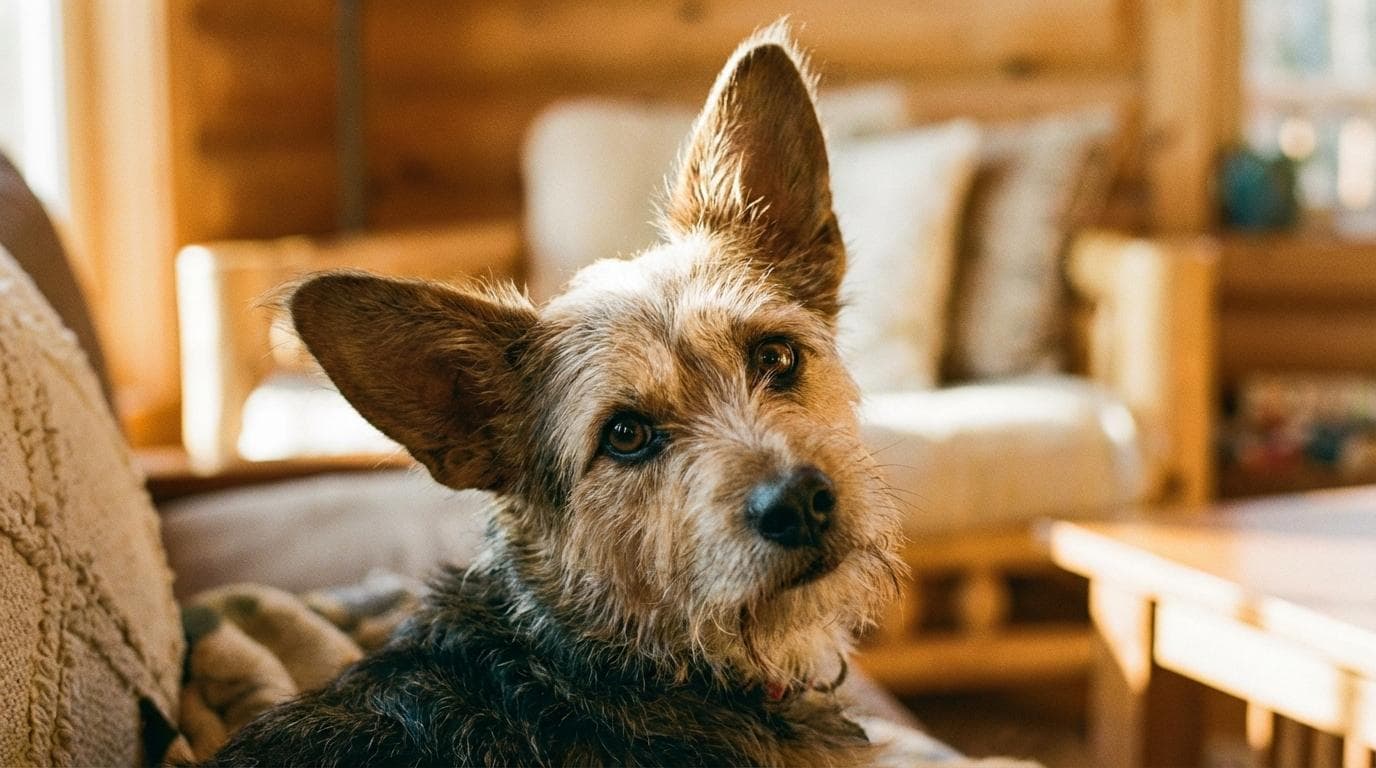
Are you feeling lost in translation when it comes to your dog? Do you wonder why they bark at the mail carrier with such intensity, or why they suddenly get the zoomies at 10 PM? Perhaps you’re dealing with a dog who lunges at other dogs on walks, or one who hides under the bed at the sound of a thunderstorm. It’s easy to feel frustrated, confused, and even a little helpless when your beloved companion’s behavior seems unpredictable or problematic.
But what if every quirky habit, every persistent bark, every nervous glance, and every joyous leap was a message? What if your dog isn't just "being naughty" or "stubborn," but rather communicating deep-seated needs, fears, or desires? The truth is, your dog’s actions are rarely random. They are rich, complex expressions of their inner world, revealing their unique `dog personality`. Learning to interpret these signals isn't just about managing unwanted behaviors; it's about forging a deeper, more empathetic bond with your best friend.
Decoding Your Dog's Personality: Beyond the Surface
To truly `understand my dog`, we must look beyond the surface of what they do and delve into why they do it. Every dog, just like every person, has a distinct personality shaped by genetics, early experiences, and ongoing interactions with their environment. Some dogs are naturally bold and adventurous, while others are cautious and reserved. Some thrive on constant social interaction, while others prefer quiet solitude.
When you start to see your dog’s behaviors as clues to their `dog personality`, a whole new world of understanding opens up. That incessant barking at the window might not be aggression, but a deep-seated need to protect their territory, perhaps stemming from an `anxious guardian` archetype. The destructive chewing could be boredom and excess energy from an `overstimulated athlete` who hasn't had enough mental or physical stimulation. Or perhaps the shy, withdrawn behavior around new people points to a `fearful reactor` who needs gentle reassurance and space.
Understanding these underlying motivations is the first step toward addressing the root cause of the behavior, rather than just trying to suppress the symptom. It’s about meeting your dog where they are and giving them what they truly need to thrive.
The Silent Language: Understanding Dog Body Language
Before we even consider complex behaviors, we must first learn to read the fundamental cues your dog is constantly sending through their `dog body language`. Dogs are masters of non-verbal communication, and they are always "talking" to us, if only we know how to listen with our eyes.
Ears Tell Tales
* Forward and Alert: Often indicates interest, curiosity, or readiness to engage.
* Pinned Back (against the head): Can signal fear, anxiety, submission, or sometimes intense focus in a worried way.
* Relaxed/Neutral: Ears are usually relaxed, slightly to the side, or gently forward, indicating a comfortable state.
Tails Are Not Just for Wagging
* High and Stiffly Wagging: Not always friendly! This can indicate arousal, tension, or even a warning. Think of it as a flag of heightened emotion.
* Low and Slowly Wagging: Often a sign of uncertainty, appeasement, or mild anxiety.
* Tucked Between Legs: A clear indicator of fear, submission, or extreme anxiety.
* Relaxed, Gentle Wag: A loose, mid-height wag often signifies happiness and friendliness. The entire body might wiggle too!
Eyes Reveal Everything
* Soft, Squinty Eyes: A sign of relaxation, contentment, or appeasement.
* "Whale Eye" (whites of the eyes showing): When your dog turns their head away but keeps their eyes fixed on something, revealing the whites. This is a strong indicator of stress, fear, or discomfort.
* Hard Stare: A direct, unblinking stare can be a challenge, a warning, or a sign of intense focus, often in a negative context.
* Frequent Blinking/Averting Gaze: Can be a sign of stress, anxiety, or an attempt to de-escalate a situation.
Mouth Movements and Facial Expressions
* Lip Licking (when no food is present): A common calming signal, indicating stress, anxiety, or an attempt to appease.
* Yawning (when not tired): Another calming signal, similar to lip licking, used to alleviate stress or communicate discomfort.
* Tight Lips/Closed Mouth: Can indicate tension or focus.
* Panting (when not hot or exercised): Can be a sign of stress or anxiety.
* Growling/Baring Teeth: Clear warning signs that your dog is uncomfortable and needs space. These are not aggression for aggression's sake, but desperate attempts to communicate boundaries.
Overall Posture and Movement
* Relaxed, Loose Body: Weight evenly distributed, muscles relaxed, often with a slight curve in the spine. This is a happy, confident dog.
* Stiff, Frozen Posture: Indicates tension, fear, or a dog preparing to react. If your dog suddenly freezes, pay attention.
* Crouching/Low to the Ground: Often a sign of fear, submission, or an attempt to appear less threatening.
* Piloerection (hackles raised): The hair standing up on your dog's back, usually from the shoulders to the tail. This indicates arousal, fear, or excitement – not necessarily aggression, but a heightened emotional state.
By observing these signals in combination, you can begin to piece together the full story of your dog's emotional state and `dog behavior meaning`.
What Your Dog's Behavior Says About Their Personality
Now, let's connect these body language cues to common behaviors and what they might be telling you about your dog's deeper `dog personality` and needs.
The Barking, Lunging Dog on Walks
Scenario: Your dog is generally sweet at home, but the moment you step outside and see another dog or person, they transform. They pull on the leash, bark incessantly, lunge forward, and seem completely out of control. It’s embarrassing, frustrating, and often scary.
What it might mean: This behavior often stems from a place of intense emotion – either frustration, fear, or an overabundance of excitement that they don't know how to manage.
Frustration: Your dog might be a `frustrated greeter`. They really* want to say hello, but the leash prevents them, leading to an outburst of frustration. They might display a loose, high tail wag and forward ears, but with tension in their body.
* Fear/Anxiety: Your dog could be an `anxious guardian` or `fearful reactor`. They might be afraid of other dogs or strangers and are trying to create distance by acting "big" and scary. Look for whale eye, a stiff body, or a tucked tail.
* Lack of Social Skills: For an `under-socialized protector`, they might not have learned appropriate social etiquette and perceive approaching stimuli as a threat due to lack of positive exposure.
Actionable Advice: Work on leash manners in low-distraction environments. Practice "look at me" and "touch" commands. Create distance from triggers and reward calm behavior. Consider a front-clip harness to reduce pulling. For fear-based reactivity, focus on positive association and desensitization, keeping your dog below their "threshold" of reaction.
The Destructive Chewer or Pacer When Left Alone
Scenario: You come home to chewed-up furniture, scratched doors, or find your dog has been pacing a worn path in the carpet. Your neighbors complain about constant whining or barking when you're gone.
What it might mean: These are classic signs of distress related to separation.
* Separation Anxiety: Your dog might be an `anxious guardian` who forms an overly strong attachment and struggles with independence. This isn't defiance; it's panic. They might also show excessive drooling, house soiling, or self-harm (licking paws raw).
* Under-stimulation/Boredom: For an `overstimulated athlete`, the destruction might be a coping mechanism for boredom and excess energy. They need an outlet for their physical and mental drive.
Actionable Advice: Rule out medical issues with your vet. For separation anxiety, consult a professional trainer for a desensitization protocol. Provide plenty of mental enrichment (puzzle toys, sniff games) and physical exercise before you leave. Practice short, calm departures and arrivals. Consider a crate if properly introduced as a safe den.
The Shy, Hiding, or Panicked Dog
Scenario: Your dog retreats under the table when guests arrive, trembles during thunderstorms, or outright refuses to walk in certain areas with loud noises. They might avoid eye contact or cower when approached too quickly.
What it might mean: These behaviors scream fear and insecurity.
* Generalized Anxiety/Fear: Your dog is likely a `fearful reactor`. This can be due to genetics, insufficient early socialization, or a traumatic past experience. They perceive many normal things as threats.
* Lack of Socialization: An `under-socialized protector` might not have had enough positive exposure to various sights, sounds, and people during their critical developmental period, leading to fear of the unknown.
Actionable Advice: Create safe, quiet spaces for your dog. Never force interactions. Use positive reinforcement to create positive associations with scary things (e.g., treats during a storm). Gradual desensitization and counter-conditioning, often with professional guidance, can slowly build confidence. Patience and empathy are key.
The Nipping, Jumping, Hyperactive Dog
Scenario: Your dog constantly jumps on visitors, nips at hands during play, or seems to have an endless supply of energy, bouncing off the walls even after a long walk. They struggle to settle down.
What it might mean: This often points to an abundance of energy, lack of impulse control, or inappropriate outlets.
* Excess Energy/Boredom: Your dog could be an `overstimulated athlete`. They have a high drive for activity and need more appropriate physical and mental challenges to channel their energy.
* Lack of Training/Impulse Control: They might not have learned how to appropriately interact with people or how to manage their excitement. This can also apply to a `frustrated greeter` who just can't contain their desire to interact.
Actionable Advice: Increase structured exercise (fetch, flirt pole, long walks/runs). Incorporate mental stimulation like training sessions, puzzle toys, and nose work. Teach impulse control commands like "leave it," "stay," and "off." Reward calm behavior heavily. Teach polite greeting behaviors like "four on the floor."
The Resource Guarder
Scenario: Your dog growls or snaps if you
Further Reading
For more expert guidance on this topic, check out these trusted resources: