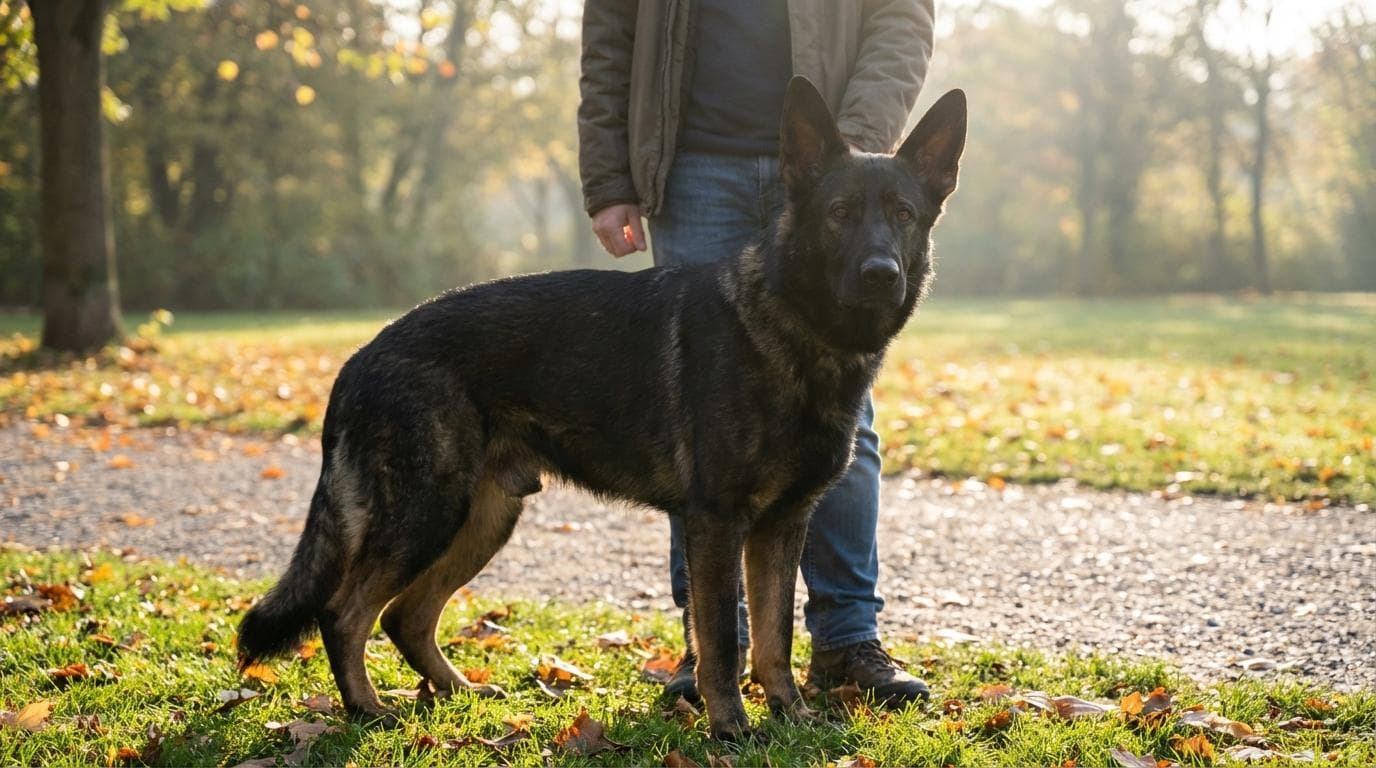
German Shepherds have a reputation for loyalty that borders on obsession. If you own one, you've probably experienced it firsthand: the dog who positions themselves between you and a stranger, who growls softly when someone approaches too quickly, who can't seem to relax unless they know exactly where you are. It feels like love, and in many ways it is. But when does that protectiveness cross a line?
Understanding why German Shepherds guard their owners requires understanding both the breed's history and the psychology of canine anxiety. The answers might surprise you.
Why German Shepherd Guarding Is Hardwired Into the Breed
German Shepherds were purpose-bred in the late 19th century by Max von Stephanitz, who wanted a dog that combined herding intelligence with the protective instincts of a guardian. The result was an animal with an exceptional capacity to bond with a single handler, read human body language, and make independent decisions about threats.
For decades, this made them the gold standard for police work, military service, and personal protection. The very traits that make them exceptional working dogs — hyper-vigilance, territory awareness, and intense human attachment — also make them prone to guarding behavior in a domestic context.
Here's the key distinction most owners miss: German Shepherds don't guard because they're confident. They guard because they're uncertain.
A truly confident dog doesn't need to be on patrol. They can rest while strangers walk by, accept guests into the home, and trust their owner to handle social situations. When a German Shepherd is constantly scanning for threats, positioning themselves as a barrier, or escalating to growling and barking at perceived intrusions, it usually signals anxiety, not strength.
This is why we classify German Shepherds who exhibit these patterns as the Anxious Guardian archetype — a dog who has taken on the role of protector not because they were asked to, but because their nervous system never learned to hand that job over.
What Protective Dog Behavior Actually Looks Like in Shepherds
Not all guarding looks the same. German Shepherd guarding behavior exists on a spectrum, and it's worth knowing where your dog falls.
At the mild end, you have a dog who simply positions themselves near you, follows you from room to room, and tends to face outward when you're sitting down. This is often charming and feels like closeness. For many dogs, it is.
Moving along the spectrum, you'll find dogs who:
- Stiffen or stare when strangers approach
- Growl softly when guests sit close to their owner
- Bark persistently when someone rings the doorbell, long after the threat is identified
- Block access to their owner by stepping in front
- Show resource guarding that extends to their person (not just objects)
The critical question to ask yourself is: can your dog be interrupted and redirected, or are they locked in? A dog who growls when a stranger approaches but can be called away, settle on their mat, and relax is very different from a dog who cannot be disengaged from a perceived threat. The latter is where guarding becomes a safety concern.
It's also worth knowing that female German Shepherds tend to exhibit more nuanced, targeted guarding behavior, while males often present with broader territory-based reactivity. Neither is inherently more dangerous, but they respond differently to training.
When German Shepherd Guarding Becomes a Problem
There are two situations where guarding always needs intervention:
The first is any guarding that involves physical aggression or that you cannot predict. If your dog has growled, snapped at, or bitten anyone in a guarding context, this is not a phase and it will not resolve on its own. It typically escalates. Professional help from a certified veterinary behaviorist or a credentialed trainer with experience in behavior modification is not optional at this point.
The second is guarding behavior that is making your life smaller. If you've stopped having guests over, if your dog reacts to your children playing with your partner, if you feel anxious any time someone approaches you on a walk — your dog's behavior is affecting your quality of life in a significant way. That's worth addressing.
There are subtler signs too. A dog who cannot settle when you're home because they're always monitoring is a dog who is chronically stressed. German Shepherds who live in this state often develop secondary issues: digestive problems, skin irritation, difficulty sleeping, and generalized anxiety that bleeds into other areas of their behavior.
German Shepherd Training Approaches That Actually Work
The instinct many owners have is to punish guarding behavior. A growl gets a sharp "no," a correction, or a leash pop. This feels intuitive — but it makes the problem measurably worse.
Here's why: if your dog is guarding out of anxiety, punishing the growl doesn't reduce the anxiety. It just removes the warning signal. Dogs who are punished for growling learn not to growl — and then they bite without warning. This is one of the most well-documented patterns in canine behavior science.
Effective German shepherd training for guarding behavior works on three fronts simultaneously.
The first is teaching the dog that strangers predict good things. This is called counter-conditioning. Every time a guest arrives, something wonderful happens — a scatter of high-value treats on the floor, a favorite toy appearing. You're not rewarding the dog for guarding; you're changing the emotional association with the trigger. Over time, strangers stop meaning "threat" and start meaning "good things happen."
The second is actively giving the dog something to do other than patrol. German Shepherds need jobs. A dog who is doing a place command on their mat while guests arrive is a dog who has an alternative to guarding. Teaching a solid "place," a strong "watch me," and a reliable "enough" gives both the dog and the owner tools for the moments that count.
The third is building the owner's confidence, not just the dog's. German Shepherds are exquisitely sensitive to human stress. If you tense every time someone approaches because you're expecting your dog to react, your dog reads that tension as confirmation that the situation is dangerous. Practicing calm, deliberate body language — loose leash, easy breathing, not staring at the dog — genuinely changes how your dog reads the situation.
One underused tool for Anxious Guardians specifically is a structured decompression protocol at home. Two 20-minute sessions per day of sniffing-based enrichment (snuffle mats, scatter feeding, nose work games) measurably reduce baseline arousal in high-drive breeds. A calmer resting state means a higher threshold before guarding kicks in.
For dogs with significant guarding behavior, medication in combination with behavior modification is often the most effective approach. A dog whose anxiety is pharmacologically managed can actually learn from training; a dog in chronic high-alert often cannot. This isn't a permanent solution for most dogs, but as a bridge during behavior modification, it changes outcomes dramatically.
What Not to Do
Skip these common approaches that tend to backfire with German Shepherds:
Trying to force your dog to "accept" guests by having strangers offer treats directly is often counterproductive in the early stages. Let the dog observe first, approach on their own terms, and receive good things from their owner.
Flooding — exposing a dog to overwhelming levels of a trigger to "get them over it" — typically increases sensitization in anxious dogs rather than reducing it. The dog isn't learning that the trigger is safe; they're learning that escape is impossible.
Reassuring a reactive dog with "it's okay, it's okay" in a high-pitched, tense voice tends to amplify their stress rather than soothe it. Calm, matter-of-fact energy communicates safety more effectively.
The Bigger Picture
A German Shepherd who guards their owner isn't a bad dog. They're often a dog who loves deeply and hasn't been given enough information about when that job is theirs to do versus yours. The goal of training isn't to eliminate their protective instincts — it's to give them the skills to stand down when those instincts aren't needed.
A well-trained German Shepherd who trusts their owner's judgment is more reliably safe, more relaxed, and ironically, more effective if a genuine threat ever arose. The anxious guardian who barks at everything is too sensitized to distinguish a real threat from a postal carrier.
Your dog wants to feel safe. They want you to take the lead. With the right approach, you can give them both.
Not sure which behavioral archetype best describes your dog? Take our free 2-minute Dog Archetype Quiz to get a personalized profile and training recommendations built around how your dog actually thinks.