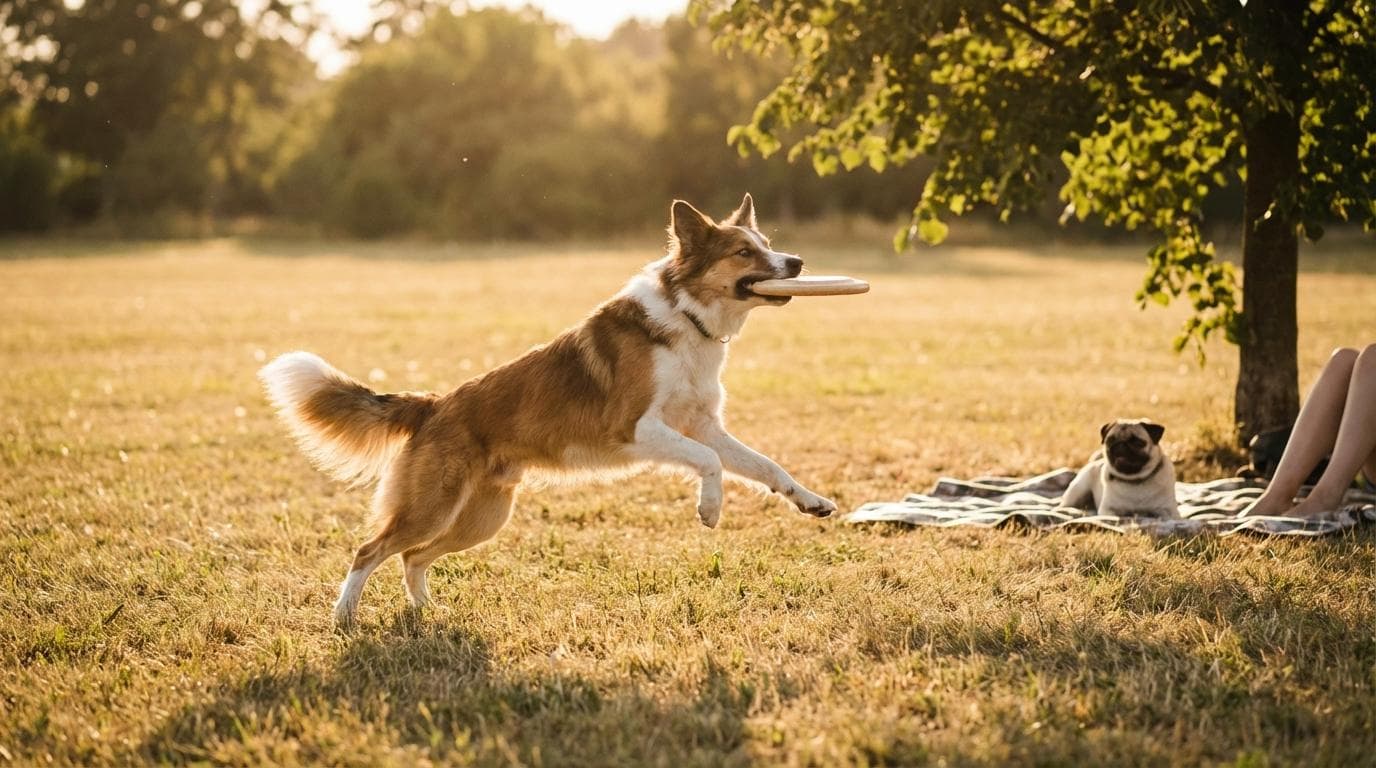
You've been told that a tired dog is a good dog. So you're running your dog three miles a day, and somehow they're more wired than ever. Or you've got a breed everyone calls "low energy" and you can't figure out why they're destroying your furniture.
The tired-dog-is-a-good-dog mantra is one of the most repeated and most incomplete pieces of advice in dog ownership. Physical exercise matters, but the type, amount, and structure of that exercise varies dramatically by breed, and getting it wrong doesn't just fail to help — it can actively create the behavior problems you're trying to prevent.
Why Breed-Appropriate Exercise Matters
Every dog breed was developed for a specific purpose, and that purpose shaped their physical structure, energy levels, and — critically — their brain. A Border Collie was built to make complex decisions while running across hillsides for hours. A Bulldog was built for short bursts of intense activity. A Beagle was built to follow scent trails for extended periods at a moderate pace. Their exercise needs aren't just about energy levels — they're about engaging the specific physical and cognitive systems their breed was designed to use.
When those systems aren't engaged appropriately, the unmet needs express themselves as behavior problems. The herding dog who doesn't get cognitive work becomes neurotic. The scent hound who doesn't get to sniff becomes destructive. The terrier who doesn't get to dig and chase becomes reactive. These aren't personality flaws — they're job requirements that aren't being met.
Exercise Needs by Breed Group
Herding Breeds (Border Collies, Australian Shepherds, German Shepherds, Heelers)
Physical need: 60-120 minutes daily of moderate to vigorous activity
The real need: Mental stimulation that mimics decision-making. Physical exercise alone is insufficient and can create a fitter, more restless dog.
Herding breeds don't just need to run — they need to think while they run. Agility, flyball, herding trials, and advanced obedience that requires sustained focus are far more settling than a long run. A 20-minute structured training session will calm most herding dogs more effectively than a 60-minute jog. Dogs in this group frequently match the Overstimulated Hunter archetype when their cognitive needs aren't met.
Sporting Breeds (Labradors, Golden Retrievers, Spaniels, Pointers)
Physical need: 60-90 minutes daily of varied activity
The real need: Retrieving, swimming, and scent work that engages their bred purpose
Sporting breeds are versatile athletes who generally do well with a mix of exercise types. Fetch, swimming, and hiking satisfy both their physical drive and their bred instinct to work in cooperation with humans. These breeds tend to be more forgiving of imperfect exercise routines than herding breeds, but they still need consistent daily activity. A Lab who only gets a 15-minute leash walk will develop problems — pulling, jumping, mouthing, destructive chewing — from unspent energy.
Terriers (Jack Russells, Bull Terriers, Schnauzers, Westies)
Physical need: 45-90 minutes daily, breed-dependent
The real need: Outlets for digging, chasing, and independent problem-solving
Terriers were bred to hunt vermin independently, often underground, which means they have high drive, high tenacity, and a strong independent streak. They need activities that let them use their natural behaviors: digging pits, flirt pole play (mimicking chasing prey), and puzzle toys that require persistence. Terriers who don't get appropriate outlets often become reactive, bark excessively, or develop obsessive behaviors.
Working/Guardian Breeds (Rottweilers, Dobermans, Mastiffs, Great Danes)
Physical need: 30-60 minutes daily of moderate activity
The real need: Structured activities that provide a sense of purpose and clear expectations
Many guardian breeds need less physical exercise than people assume, but they need more structure and mental engagement. Obedience training, task-based activities, and controlled socialization are more important than distance running. Over-exercising large breed puppies can also cause joint damage, so moderation is especially important during development.
Scent Hounds (Beagles, Bloodhounds, Basset Hounds, Coonhounds)
Physical need: 45-60 minutes daily of moderate activity
The real need: Scent-based enrichment — sniff walks, nose work, tracking games
Scent hounds process the world through their nose. A 30-minute "sniff walk" where the dog is allowed to follow scent trails at their own pace is more enriching for a Beagle than a 60-minute structured walk at heel. Scent work classes, tracking, and food-scatter games in grass engage their primary sense and provide deep mental satisfaction. A scent hound who is never allowed to sniff is a scent hound who howls, digs, and escapes.
Brachycephalic Breeds (Bulldogs, Pugs, French Bulldogs, Shih Tzus)
Physical need: 20-40 minutes daily of gentle activity
The real need: Carefully managed exercise that avoids overheating and respiratory distress
Flat-faced breeds have compromised airways that make vigorous exercise genuinely dangerous, especially in warm weather. Short, gentle walks, indoor play, and puzzle toys are appropriate. These breeds still need mental stimulation, but physical exercise must be carefully monitored. If your brachycephalic dog is panting heavily, gasping, or showing blue-tinged gums, stop exercise immediately.
Companion/Toy Breeds (Chihuahuas, Maltese, Cavaliers, Pomeranians)
Physical need: 20-45 minutes daily of light to moderate activity
The real need: Social interaction, short training sessions, and play
Small dogs still need exercise — the behavior problems in toy breeds (excessive barking, anxiety, aggression toward strangers) often stem from owners assuming they don't. Two or three short walks plus indoor play and brief training sessions keep most toy breeds balanced. Their small size means the exercise doesn't need to be intense, but it does need to happen daily.
The Over-Exercise Trap
More exercise is not always better. For high-drive breeds especially, endlessly increasing physical exercise creates a fitter dog who now requires even more exercise to feel tired. You're building an athlete when what you need is a calmer companion.
The solution isn't more exercise — it's the right kind. If your dog is still wired after an hour of running, the missing piece is almost certainly mental stimulation, not additional miles. Ten minutes of focused nose work or impulse control training can settle a dog that a two-hour hike couldn't touch.
The Under-Exercise Warning Signs
Dogs who aren't getting enough appropriate exercise tell you through their behavior:
- Destructive chewing (especially in dogs over 1 year old)
- Excessive barking or howling
- Hyperactivity and inability to settle
- Jumping on people
- Leash pulling and reactivity
- Escaping the yard
- Attention-seeking behaviors that escalate when ignored
Your dog's exercise needs connect directly to their behavioral archetype. Take the free Dog Archetype Quiz to discover whether your dog's behavior patterns stem from unmet exercise needs and get a customized plan for your specific dog.