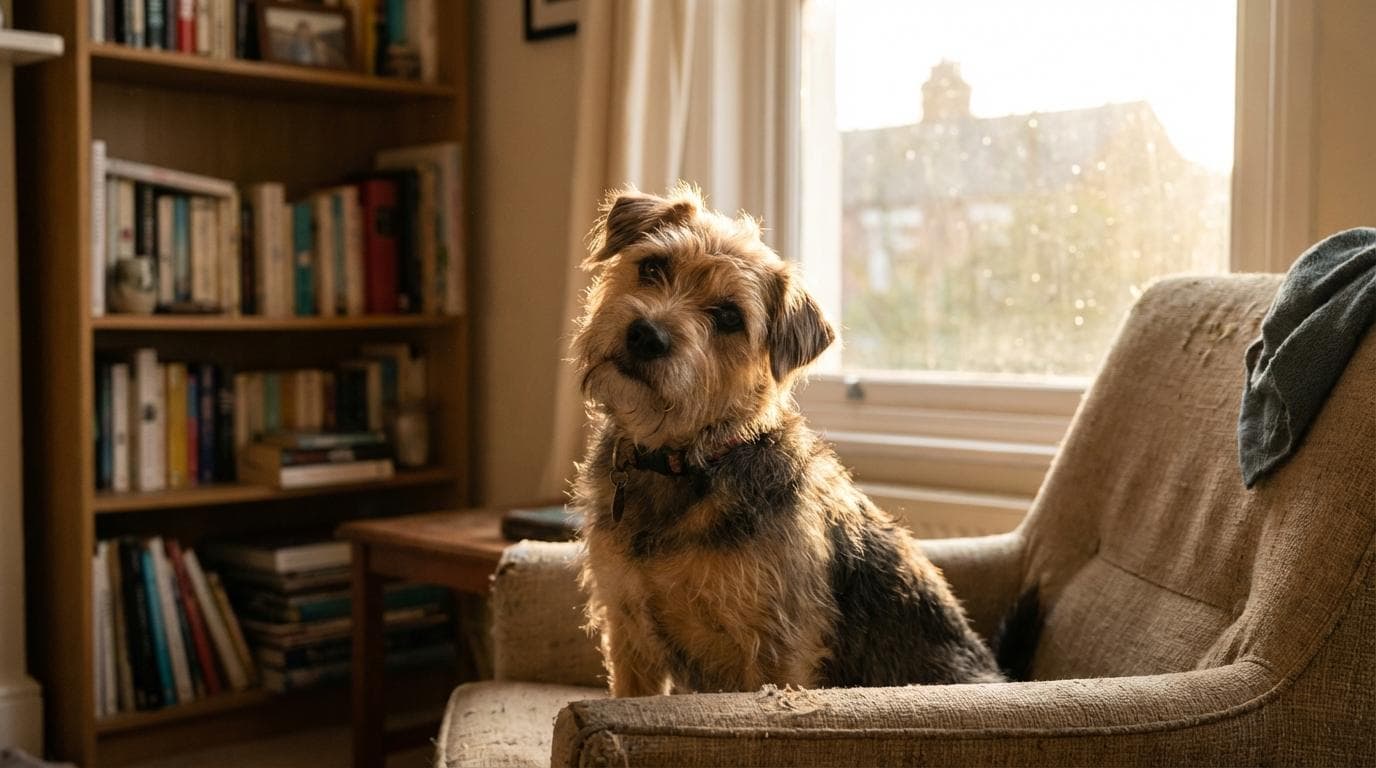
If you've spent any time in a dog park, you've probably seen it: a Chihuahua snarling at a Labrador three times its size, a Dachshund lunging at strangers, a Yorkshire Terrier ruling the household with an iron paw while the humans tiptoe around it. Small dogs have a reputation — and most people chalk it up to something called "small dog syndrome."
But here's the thing about that phrase: it explains nothing. It's a label that sounds scientific while actually pointing the finger at the dog rather than at the humans and circumstances that shaped the dog's behavior. If you want to understand why your small dog is snapping, barking, lunging, or refusing to back down from dogs ten times their size, "small dog syndrome" is not your answer. The truth is more useful — and more fixable.
What Small Dog Syndrome Actually Describes
The term "small dog syndrome" typically refers to a cluster of behaviors seen in small dogs: excessive barking, aggression toward other dogs or strangers, resource guarding, difficulty with commands, and an apparent belief that the rules don't apply to them. The popular explanation is that small dogs are inherently more feisty or dominant because of something in their nature.
This is backwards.
Small dogs are not more behaviorally difficult because of genetics. They are more behaviorally difficult — when they are — because of how they are trained and socialized compared to large dogs. The same behaviors that get a Rottweiler enrolled in obedience classes the next day are cheerfully tolerated in a Maltese because nobody feels physically threatened. The result is a dog who has never learned that their behavior has consequences, has never been asked to develop any impulse control, and has been inadvertently rewarded for exactly the behaviors their owner finds embarrassing.
The dog didn't develop a syndrome. The dog learned what worked.
Why Small Dogs Are More Likely to Be Fearful Reactors
There is one sense in which small dogs do face a genuinely different experience of the world: everything in it is enormous and frequently threatening. A medium-sized dog at eye level with a Chihuahua is the equivalent of a horse-sized animal appearing in your personal space without warning. Children who want to pick them up, strangers who reach for them over their heads, large dogs who want to play in ways that feel overwhelming — the small dog's daily life is full of experiences that a larger dog would navigate with relative ease but that are legitimately alarming at small-dog scale.
This is why small dogs are disproportionately represented in what we call the Fearful Reactor archetype: dogs whose primary behavioral driver is anxiety, and whose outward behavior — barking, snapping, lunging, posturing — is a defensive strategy rather than a dominance display. The Chihuahua standing its ground against a German Shepherd isn't brave or dominant. They're terrified and doing the only thing that has historically made the scary thing go away.
Understanding this distinction changes everything about how you address the behavior. A dog performing a dominance display needs different handling than a dog in a fear response. Most small dogs who are labeled "aggressive" are actually afraid, and treating their fear as if it were arrogance makes the fear worse, not better.
How Small Dog Training Gaps Create Small Dog Behavior Problems
Let's walk through the typical small dog upbringing and see where the problems enter.
Because they're small, they're often carried rather than walked through new environments, which deprives them of the on-the-ground experience needed for normal socialization. When a small dog is held in someone's arms during exposure to new people and places, they're not really being socialized — they're being physically prevented from making behavioral choices, which is not the same thing.
Because their puppy teeth don't draw blood and their puppy body doesn't knock anyone over, bite inhibition is rarely addressed. Small dogs who bite and nip as puppies often continue to bite and nip as adults, because no one consistently communicated that it wasn't acceptable. The same nip that would cause immediate intervention from a Labrador owner is laughed off from a Pomeranian.
Because carrying them is easier than teaching them, leash manners are frequently skipped. The small dog never learns to walk calmly on leash because they spend most walks either being carried or barreling along with a full-length extension leash and no guidance. Loose-leash walking is a foundation behavior that transfers to general impulse control — skip it, and you skip that foundation.
Because setting limits with a small dog requires no physical effort, limits are set inconsistently or not at all. The small dog who sleeps on the bed, eats from the table, and growls when displaced has not become dominant — they've become an animal who has no predictable social rules and therefore treats every request for compliance as a negotiation.
The Fearful Reactor Archetype in Small Dogs
The Fearful Reactor, regardless of size, is a dog whose nervous system learned to default to alarm and defensive behavior in the face of uncertainty. For small dogs, the triggers are often things that would seem mundane to a larger, more confident dog: unfamiliar people approaching, other dogs invading personal space, children running or squealing, being lifted unexpectedly, loud or sudden noises.
Fearful Reactors typically display their anxiety through behaviors that look, on the surface, like aggression. Barking, growling, snapping, and lunging are all strategies a frightened dog uses to create distance between themselves and a perceived threat. The behavior works: the scary thing backs away. This teaches the dog that alarm behavior is effective, which makes them more likely to use it sooner next time.
In small dogs, this cycle accelerates because people often respond to small-dog alarm behavior with laughter, dismissal, or physical restraint rather than taking it seriously as a communication. The dog learns their signals aren't being heard, and the signals escalate. What began as a growl becomes a snap. What began as a snap becomes a bite. The dog who bites isn't behaving differently in kind from the dog who growled — they're just further along a progression that was never interrupted.
Key signs your small dog is a Fearful Reactor rather than a "dominant" small dog:
- Behaviors escalate with proximity rather than diminishing once contact is made
- Body language shows fear signals: ears back, tail tucked, whale eye, hard stare, crouching
- The dog backs away when given the chance rather than pressing forward
- Alarm behaviors are more intense in novel environments or with unfamiliar people
- The dog seems genuinely relieved, not victorious, when the trigger retreats
Small Dog Aggression: What Actually Helps
Because most small dog behavior problems are rooted in a training gap and, frequently, in anxiety, the interventions that work address both of those root causes.
Start by taking the behavior seriously. A small dog who growls when picked up is communicating something important. Dismissing it or laughing at it doesn't address the communication — it removes the dog's ability to warn before escalating. Respectful handling, giving the dog control over their own body where possible, and not forcing interactions the dog is signaling they don't want builds trust and reduces the anxiety driving the behavior.
Invest in actual training. Small dogs benefit from obedience training just as much as large dogs — arguably more, because the training gap is where most of their problems originated. Basic commands, impulse control work, and reliable recall give a small dog a framework for navigating the world. Dogs with a clear behavioral structure are generally less anxious than dogs who must constantly improvise, because structure is predictable and predictability is safe.
Socialize thoughtfully and on the dog's terms. For a small dog with existing reactivity, flooding — forcing the dog into proximity with their triggers in hopes they'll get used to it — reliably makes things worse. Systematic desensitization, which means controlled exposure at intensities below the dog's threshold paired with good outcomes, is the evidence-based approach. The goal is to change the dog's emotional response to the trigger, not just to suppress the visible behavior.
Address what's underneath. If your small dog's reactivity is driven by anxiety rather than just inadequate training — if they're genuinely distressed and unable to settle, if their triggers are numerous and the behavior is intense — a veterinary behaviorist consultation is worth pursuing. Anxiety medication, used as part of a behavior modification plan, can lower the baseline enough for training to actually work.
Setting Realistic Expectations
Small dogs who have had years of unaddressed fearful reactivity don't change overnight. The nervous system patterns that drive these behaviors are well-established, and changing them requires consistent work over months. Progress looks like a dog who reacts less intensely, recovers faster, and has a wider threshold before tipping into alarm — not necessarily a dog who stops reacting entirely.
Management matters. Using a harness instead of a collar on a reactive small dog reduces pressure on the throat during reactions. Keeping the dog behind you rather than allowing them to charge forward on walks gives you more influence over encounters. Not forcing greetings that the dog is signaling they don't want prevents negative experiences that reinforce the alarm response.
Small dogs are not small problems waiting to become big problems. They're dogs with behavioral needs that have frequently been treated as optional. Meeting those needs — through training, socialization, and understanding what's actually driving the behavior — produces dogs who are dramatically different from the stereotype. The behavior was learned. It can be unlearned.
Take our free 2-minute Dog Archetype Quiz to find out if your dog matches the Fearful Reactor profile — and get practical, personalized guidance on helping them feel safer in the world.