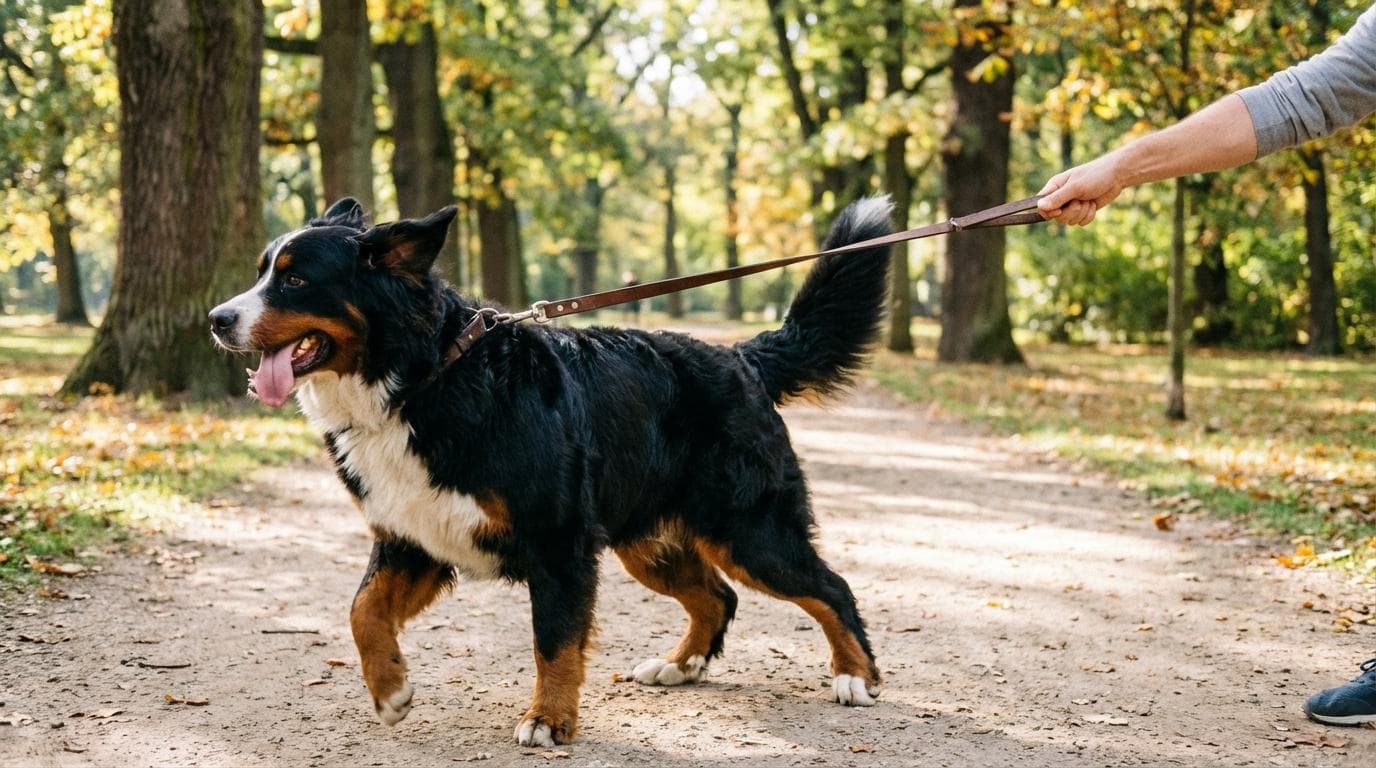
It’s a scene you know all too well: You clip on the leash, brimming with optimism for a pleasant stroll with your furry best friend. But the moment you step outside, your dog transforms into a sled dog, pulling relentlessly, dragging you down the street, and turning what should be a relaxing walk into a frustrating tug-of-war. Your shoulder aches, your patience wears thin, and you wonder if you’ll ever enjoy a calm walk again.
You’re not alone. This is one of the most common challenges dog owners face, and it’s incredibly disheartening when your dog pulls on walks. The good news is, you absolutely can teach your dog to walk nicely on a leash, and you can do it without resorting to harsh corrections or painful tools. This isn't about dominance or making your dog submit; it's about understanding their world, communicating effectively, and becoming the most interesting thing on the walk.
Understanding Why Your Dog Pulls on Walks (It's Not About Dominance)
Before we dive into solutions for how to stop a dog pulling leash, let’s understand the "why." Your dog isn't pulling to be defiant or because they're trying to be the "alpha." They're pulling for much simpler, more instinctual reasons.
The World is a Giant Sniffari
Imagine stepping into a vibrant, bustling city after being in a quiet room. Every sight, sound, and smell would bombard your senses. That’s what a walk is like for your dog, but amplified by their incredible sense of smell. To them, the sidewalk is a living newspaper, filled with stories left by other dogs, squirrels, and countless other creatures. Every tree, bush, and lamppost holds a fascinating new chapter. They want to get there, and they want to get there now. Their excitement drives them forward, and the leash becomes merely an obstacle.
Over-Excitement and Under-Stimulation
Many dogs, especially those with high energy levels, simply get over-excited by the prospect of a walk. They might be cooped up all day, and the sudden rush of freedom and new experiences overwhelms them. This over-excitement often manifests as frantic pulling. Conversely, some dogs might be under-stimulated in their daily lives, meaning the walk becomes their primary outlet for physical and mental energy. For an Overstimulated Athlete Archetype, this drive to move and explore can be incredibly strong, making loose leash walking a significant challenge without proper outlets elsewhere.
Lack of Clear Communication
Dogs aren’t born knowing how to walk politely on a leash. It’s a skill we need to teach them. If we haven’t clearly communicated what we want – that a loose leash means forward movement and a tight leash means stopping – then how can we expect them to understand? Often, we inadvertently reinforce pulling by continuing to move forward when the leash is tight.
The Reinforcement Loop (You're Accidentally Training It!)
This is crucial. Every time your dog pulls and gets to sniff that interesting spot, or reaches the park, or simply gets to move forward, you’ve just reinforced the pulling behavior. They learn: "If I pull, I get to where I want to go." This creates a strong habit that can be tough to break, but not impossible.
The Foundation of Loose Leash Walking: Becoming More Interesting
The core principle behind teaching your dog to stop dog pulling leash is to make you more interesting than the environment. This doesn't mean you're boring! It means we need to leverage what motivates your dog to focus on you, even amidst the distractions.
Your Energy Matters
Dogs are incredibly perceptive. If you’re tense, frustrated, or anxious about the walk, your dog will pick up on that energy. Try to approach each walk with a calm, confident, and positive mindset. Your relaxed demeanor can help your dog feel more secure and less inclined to rush ahead.
The Power of High-Value Rewards
Forget the dry kibble for leash training. You need the good stuff! Think small pieces of cooked chicken, cheese, hot dogs, or whatever your dog absolutely goes crazy for. These high-value treats will be your secret weapon to capture your dog’s attention and reward them for making the right choices. The goal is to make being next to you, with a loose leash, the most rewarding place to be.
Building a Strong Connection Before the Walk
Leash training doesn't just happen on the walk. Spend time every day engaging with your dog in fun, positive ways. Play games, practice obedience cues in a low-distraction environment, and simply cuddle. A strong bond built on trust and positive experiences will make your dog much more inclined to pay attention to you when distractions arise.
Practical Strategies to Stop Dog Pulling Leash
Now, let's get into the actionable steps for effective leash training. Remember, consistency is key!
The "Be a Tree" Technique
This is a classic for a reason, and it’s incredibly effective for teaching your dog that pulling gets them nowhere.
1. Start: Begin your walk. The moment your dog’s leash tightens, stop moving immediately.
2. Become a Tree: Stand perfectly still. Don’t speak, don’t pull back on the leash, don’t react. Just become a statue.
3. Wait for Slack: Wait for your dog to stop pulling and create slack in the leash. This might mean they turn to look at you, sit, or simply relax their body.
4. Reward and Resume: The instant you see that slack, say "Yes!" or click a clicker, and immediately offer a high-value treat right at your side. Then, calmly resume walking.
5. Repeat: If your dog pulls again, immediately stop again. You might stop and start many times at first, but your dog will quickly learn that pulling stops the fun, and a loose leash keeps it going.
The U-Turn or Change of Direction
This technique keeps your dog guessing and reinforces that your attention is what matters most.
1. Walk: As you’re walking, if you feel the leash start to tighten or anticipate your dog pulling towards a distraction (like a squirrel or another dog), cheerfully say "Let's go!" and immediately turn 180 degrees in the opposite direction.
2. Follow Me: Your dog will likely be momentarily surprised and follow you. As they catch up and walk beside you with a loose leash, reward them with a treat and praise.
3. Keep it Varied: Don't just do U-turns. Vary your direction often – turn left, turn right, speed up, slow down. This teaches your dog to pay attention to your movements rather than blindly forging ahead. This is especially helpful if your dog is an Under-socialized Protector or an Anxious Guardian who might be pulling to create distance or avoid perceived threats.
Reward for Proximity (The Magnet Game)
This strategy makes being near you incredibly rewarding.
1. Treat Delivery: Hold a handful of high-value treats. As you walk, every few steps, drop a treat right at your side, praising your dog as they eat it. The goal is for them to associate being in that "sweet spot" next to you with delicious rewards.
2. Random Reinforcement: Don't be predictable. Sometimes reward after one step, sometimes after five, sometimes when they glance up at you. This makes them want to stay close and check in with you regularly.
3. Increase Distractions Gradually: Start this game in a quiet area, then slowly introduce more distractions as your dog gets better.
Short, Frequent Training Sessions
Instead of trying to tackle a full hour-long walk with intensive training, break it down. Practice loose leash walking for 5-10 minutes in a low-distraction environment (like your backyard or a quiet street) several times a day. As your dog improves, gradually increase the duration and introduce more distractions.
Harnesses and Head Halters: Tools, Not Cures
While training is paramount, certain tools can help manage pulling while you're teaching your dog.
* Front-Clip Harness: A harness that clips at your dog's chest (rather than their back) can be very effective. When your dog pulls, the leash redirects them to the side, making it physically harder for them to pull forward with their full body weight. This is a great management tool that prevents pressure on their sensitive trachea and can make walks more comfortable for both of you.
* Head Halter: A head halter (like a Halti or Gentle Leader) gives you more control over your dog's head, and where the head goes, the body follows. These can be very effective but require careful introduction and positive association to ensure your dog doesn't find them aversive.
Remember, these are tools to help manage the behavior while you train. They don't teach your dog to walk politely on their own. The real change comes from consistent positive reinforcement and clear communication.
Addressing Specific Pulling Scenarios (and Archetypes)
Different dogs pull for different reasons, and understanding your dog's Archetype can give you deeper insights into their motivations.
The Squirrel Chaser (Overstimulated Athlete)
If your dog is an Overstimulated Athlete, their prey drive might be incredibly strong. They see a squirrel, and their instinct takes over.
Strategy: Prevention is key. Scan ahead and anticipate distractions. If you spot a squirrel, redirect your dog's attention before* they see it. Use a cheerful "Look at me!" cue, reward them heavily for eye contact, and change direction, or create distance. Practice "leave it" in low-distraction environments first. For these dogs, ensuring they have plenty of appropriate outlets for their energy (like fetch, flirt pole play, or dog sports) can significantly reduce their frantic energy on walks.
The Leash Reactivity Puller (Fearful Reactor, Frustrated Greeter, Anxious Guardian)
Some dogs pull and lunge because they are reactive to other dogs, people, or specific triggers. This isn't just about wanting to get somewhere; it's often rooted in fear, frustration, or a need to protect.
* Strategy: This requires a more nuanced approach called "desensitization and counter-conditioning." The goal is to change your dog's emotional response to the trigger.
Identify the Threshold: Find the distance at which your dog notices* the trigger but doesn't react. This is their threshold.
* Positive Association: When your dog sees their trigger at a safe distance (below threshold), immediately start feeding them high-value treats. Stop feeding when the trigger is gone. The idea is for them to associate the trigger with good things happening.
* Increase Distance/Duration Slowly: Gradually decrease the distance or increase the exposure time as your dog shows a relaxed response.
* Avoid Over-Exposure: Do not push your dog over their threshold. If they react, you're too close, and you need to create more distance.
* For a Fearful Reactor, pulling might be an attempt to escape. For a Frustrated Greeter, it's about desperately wanting to get to the other dog. For an Anxious Guardian, it might be a protective display. Understanding their "why" helps tailor the approach.
The "I Just Want To Go" Puller (Under-socialized Protector, Overstimulated Athlete)
This dog isn't necessarily reactive; they just have a powerful urge to explore, sniff, or get to a specific destination (like the dog park or home).
* Strategy: Combine the "Be a Tree" and "Magnet Game" techniques. Make stopping and waiting for a loose leash the only way to move forward. Also, incorporate structured sniff breaks. Instead of letting them pull to every sniff spot, stop, release them with a "Go sniff!" cue, allow them to explore for a short period, then call them back, reward, and resume walking politely. This teaches them that sniffing is a privilege earned by good leash manners, not a right obtained by pulling. An Under-socialized Protector might be highly motivated by exploring and marking territory, and structured sniff breaks can fulfill this need in a controlled way.
Consistency and Patience: The Keys to Leash Training Success
Teaching your dog to walk nicely on a leash won't happen overnight. It requires dedication, consistency, and a generous dose of patience.
Manage Expectations
There will be good days and bad days. Your dog might be doing wonderfully, and then a rogue squirrel or an unexpected sound might send them back to old habits. Don't get discouraged! Every time you practice, you're building new neural pathways and strengthening the desired behavior.
Celebrate Small Wins
Did your dog take three steps with a loose leash? That’s fantastic! Did they look at you instead of pulling towards a distraction? Incredible! Acknowledge and reward every tiny step in the right direction. These small successes build confidence in both you and your dog and reinforce the positive training loop.
Walking your dog should be a joyful experience for both of you. By understanding why your dog pulls and implementing these force-free, positive reinforcement techniques, you can transform those frustrating walks into pleasant, connected strolls. It’s about building a partnership, not winning a power struggle.
Want to understand exactly why your dog behaves this way? Take our free 2-minute Dog Archetype Quiz to discover your dog's unique behavioral profile and get a personalized training plan.
Further Reading
For more expert guidance on this topic, check out these trusted resources: