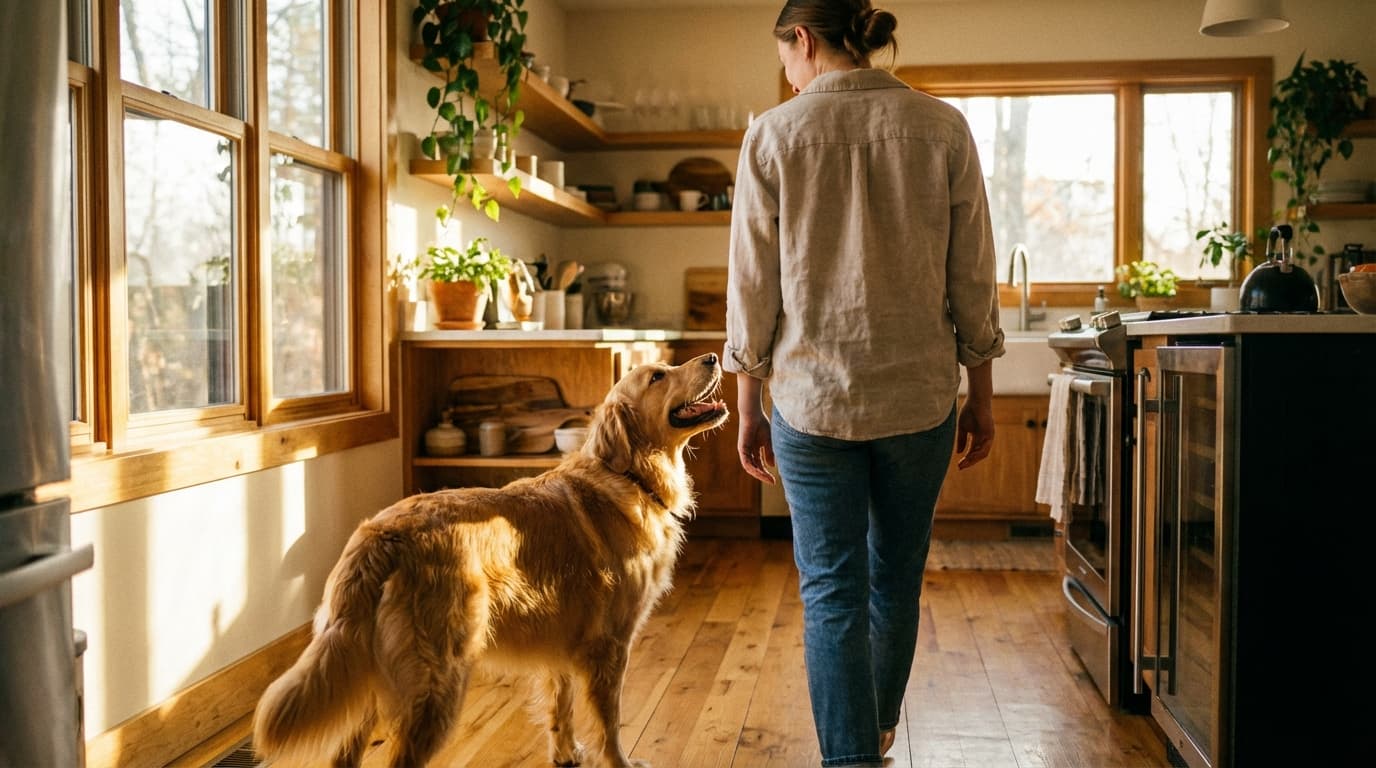
Velcro dogs are one of the most misunderstood personality types in the dog world. If your dog shadows your every step, waits outside the bathroom door, and watches you with undivided attention the moment you reach for your keys, you may be living with a velcro dog. Understanding what drives this behavior is the first step to helping your dog feel genuinely secure, whether you are at home or away.
What Is a Velcro Dog?
A velcro dog is a dog that attaches itself to one person and follows that person relentlessly throughout the day. The term is affectionate, but the underlying behavior can signal real emotional needs. These dogs are not simply loving. They are often anxious, hyper-attuned to their human, and struggling to self-regulate when that person is out of sight.
The velcro dog temperament is different from a dog who simply enjoys your company. A dog who likes being near you will settle happily in the same room, but a velcro dog will pace, whine, or nudge you insistently the moment you stop engaging. The difference is need versus preference. One dog finds comfort in proximity. The other finds relief.
Breeds like Labrador Retrievers, Vizslas, and many small companion breeds have been selectively bred for close human contact over generations. Some were literally designed to be within arm's reach of a person at all times. But environment plays an equally important role. A dog who was never taught to settle alone, or who experienced unpredictable early-life stress, is more likely to develop clingy patterns regardless of breed.
Why Your Dog Follows You Everywhere
There are several reasons a dog might shadow your every move. Understanding which applies to your dog will help you choose the right approach.
- Learned behavior: If your dog has been rewarded for following you, even accidentally through eye contact or quiet petting, they have learned that proximity pays off.
- Anxiety: Dogs who are anxious often use their owner as a safe base. When that base moves, the dog must move too.
- Boredom: Under-stimulated dogs fill idle time by monitoring their favorite human, especially in high-drive breeds that are not getting enough mental exercise.
- Medical changes: A sudden increase in clinginess in an adult dog can signal pain, cognitive decline, or hormonal shifts. Always rule out a health cause if the behavior appears suddenly.
Velcro Dog Behavior and Separation Anxiety: Are They the Same?
Velcro behavior and separation anxiety exist on a spectrum, but they are not identical. A velcro dog may be completely fine once you leave the house, as long as the pre-departure routine is calm. A dog with true separation anxiety, however, will often begin showing distress during your departure cues: reaching for your bag, putting on your shoes, or picking up your keys.
Classic signs of separation anxiety include destructive behavior only when alone, elimination indoors despite being reliably house-trained, excessive vocalization when left, and self-injury such as paw licking or attempts to escape. Velcro behavior without these symptoms may simply represent a dog who needs more independence practice, not clinical intervention.
If your dog shows multiple signs of full separation anxiety, working with a certified veterinary behaviorist or a trainer who specializes in separation-related disorders is the most effective path forward. Early intervention consistently leads to better outcomes than waiting until the behavior is entrenched.
How to Help a Velcro Dog Build Independence
The good news is that most velcro dogs can learn to be comfortable on their own with consistent, patient training. The goal is not to push your dog away but to teach them that distance from you is safe and even enjoyable.
Start with the mat game. Choose a comfortable mat or bed and reward your dog with high-value treats every time they choose to lie on it. Gradually increase the duration before delivering the treat. This teaches your dog that settling in their own space is more rewarding than following you across the kitchen.
Practice micro-separations throughout the day. Move to another room for 10 seconds, return calmly, and ignore any following behavior. Increase duration gradually over days and weeks. The key is returning before your dog becomes anxious, so they learn that you always come back. This builds a history of successful separations that the dog can draw on emotionally.
Departure cues need to be desensitized. Pick up your keys, put on your shoes, and then sit back down without leaving. Repeat this many times a day until your dog no longer reacts to these triggers. For some dogs, this alone reduces pre-departure anxiety significantly by breaking the learned association between cues and your absence.
Enrichment feeding is another powerful tool. Feeding meals in food-dispensing toys like Kongs or snuffle mats gives your dog something absorbing to do that is entirely independent of you. Over time, your dog learns to occupy themselves productively, and they begin to associate your absence with good things rather than dread.
Take the free quiz to identify your dog's specific archetype and get a personalized program tailored to their attachment style and anxiety level.
Day-to-Day Life With a Velcro Dog
Training takes time, and in the meantime there are practical things you can do to make daily life more manageable. Provide a comfortable, enriched space where your dog can settle when you need to move around the house. Use a baby gate to create gentle distance without full separation. Practice calm greetings and departures so your comings and goings are low-drama events rather than emotional peaks your dog has to recover from.
Avoid inadvertently reinforcing anxious behavior. When your dog whines or paws at you, wait for a moment of calm before offering attention. This teaches your dog that calm behavior is the key to connection, not urgency. Over weeks, most dogs begin to self-regulate more effectively because they trust that calmness works.
If your dog cannot settle for even five minutes without seeking you out, has injured themselves trying to follow you, or shows signs of gastrointestinal distress related to your departures, these are signals that self-guided training alone may not be enough. A certified applied animal behaviorist or veterinary behaviorist can assess whether medication-assisted training is appropriate. For moderate to severe separation anxiety, behavior modification combined with short-term medication has a much stronger evidence base than training alone.
The velcro dog is not a broken dog. They are a dog whose emotional regulation system needs building. With the right approach, the right support, and the patience to work at their pace, most clingy dogs can learn to be content whether you are right beside them or in the next room. Understanding your dog's archetype is the foundation of that work.