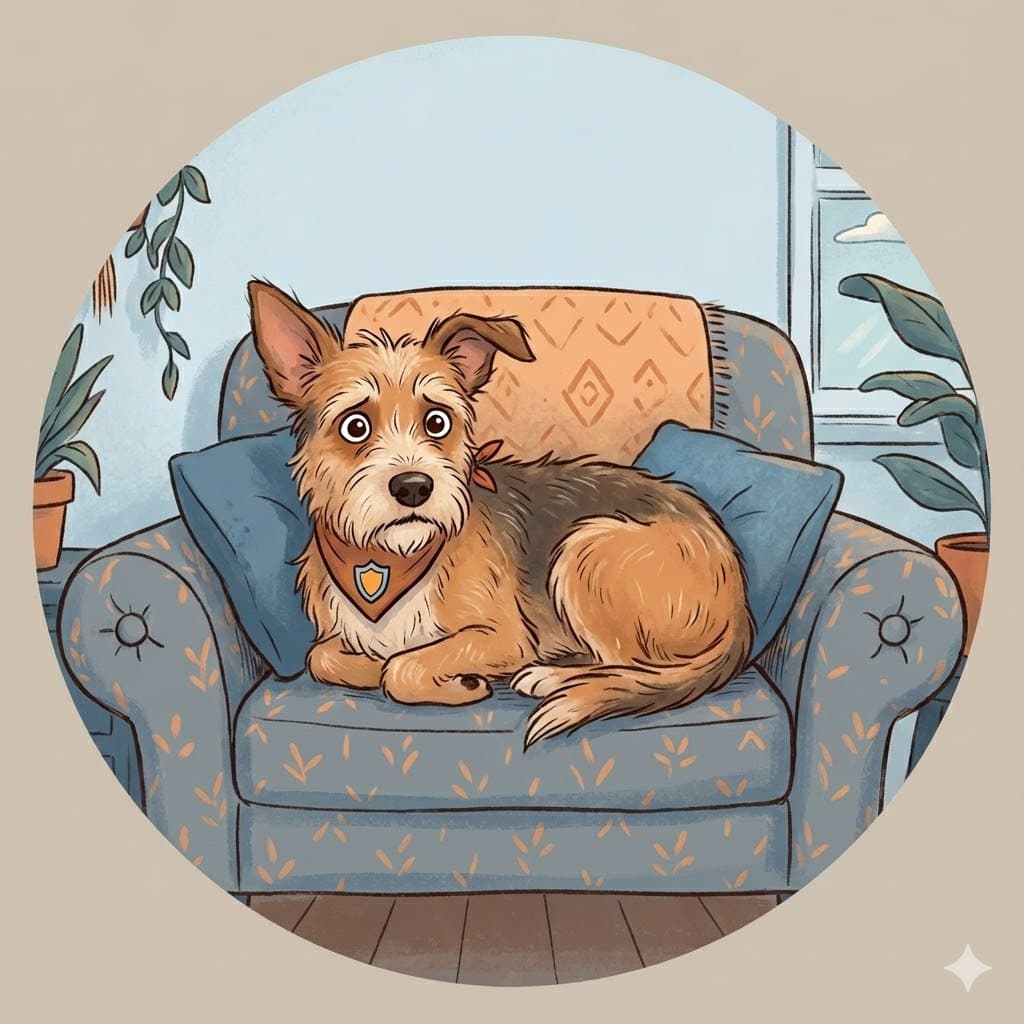
Dog Archetype
The Anxious Guardian
Your dog isn't aggressive—they're worried
Is This Your Dog? Take the Free QuizUnderstanding The Anxious Guardian
You've noticed the pattern: the moment you reach for your keys, your dog's ears flatten. When the doorbell rings, they explode into a frenzy of barking that sounds genuinely distressed. When you leave—even for five minutes—they pace, whine, or worse, destroy the doorframe trying to follow you. Your neighbors have mentioned the howling. You feel guilty, frustrated, and increasingly trapped in your own home.
Here's what's really happening: your dog has appointed themselves as your protector, but their nervous system is stuck in permanent "threat detection" mode. This isn't dominance or spite—it's a neurobiological pattern rooted in an overactive amygdala, the brain's fear center. Dogs in this archetype experience genuine panic when separated from their attachment figure or when they perceive threats to their "pack." The constant cortisol flooding their system makes relaxation nearly impossible. But here's the critical insight from behavioral science: anxiety-driven behaviors are highly treatable through systematic desensitization and counterconditioning protocols. Your dog's brain can be rewired to associate once-threatening stimuli with safety and calm.
The guardian energy that currently manifests as destructive panic can transform into quiet confidence. With structured departure protocols, gradual exposure training, and teaching a secure "safe space" behavior, you'll watch your dog progress from hypervigilant distress to settled contentment. The timeline is measured in weeks, not months, and the transformation is often dramatic—owners report feeling like they have a "different dog" once the anxiety loop is broken.
Signs Your Dog Is Anxious Guardian
Barks excessively at doorbell, visitors, or unexpected sounds
Shows distress when left alone (whining, pacing, destructive behavior)
Hypervigilant—constantly scanning the environment
Difficult to settle or relax, even at home
May guard you from perceived threats (people, other dogs)
Slow to trust new people or situations
What Triggers This Behavior?
- ⚡Being left alone
- ⚡Strangers approaching you or your home
- ⚡Sudden noises (doorbell, cars, thunder)
- ⚡Changes in routine
- ⚡Separation from their primary person
Why Dogs Become Anxious Guardians
🧬 Genetics & Breed
Certain breeds show higher genetic predisposition to anxiety-related behaviors—particularly herding breeds (Border Collies, Australian Shepherds) bred for hyper-awareness, and working breeds (German Shepherds, Malinois) with strong protective instincts. Genetic temperament studies show that fearfulness and anxiety have heritability estimates of 25-40%, meaning selective breeding and lineage significantly influence a dog's baseline anxiety levels.
🏠 Environment
Lack of consistent routine, unpredictable human behavior, or a chaotic household amplifies anxiety. Environmental stressors such as frequent visitors, urban noise pollution, lack of a designated "safe space," or inconsistent responses to barking reinforce hypervigilance.
📖 Life Experience
Early separation from mother or littermates before 8 weeks, limited positive socialization during the critical period (3-14 weeks), traumatic experiences (shelter stress, rehoming, negative encounters with strangers), or a history of punishment-based training can all create or worsen separation anxiety and hypervigilance. Dogs who successfully "predicted" their owner's departure through pre-leaving cues (keys, shoes) develop conditioned anxiety responses to those triggers.
How to Spot It: Behavioral Markers
Physical Signs
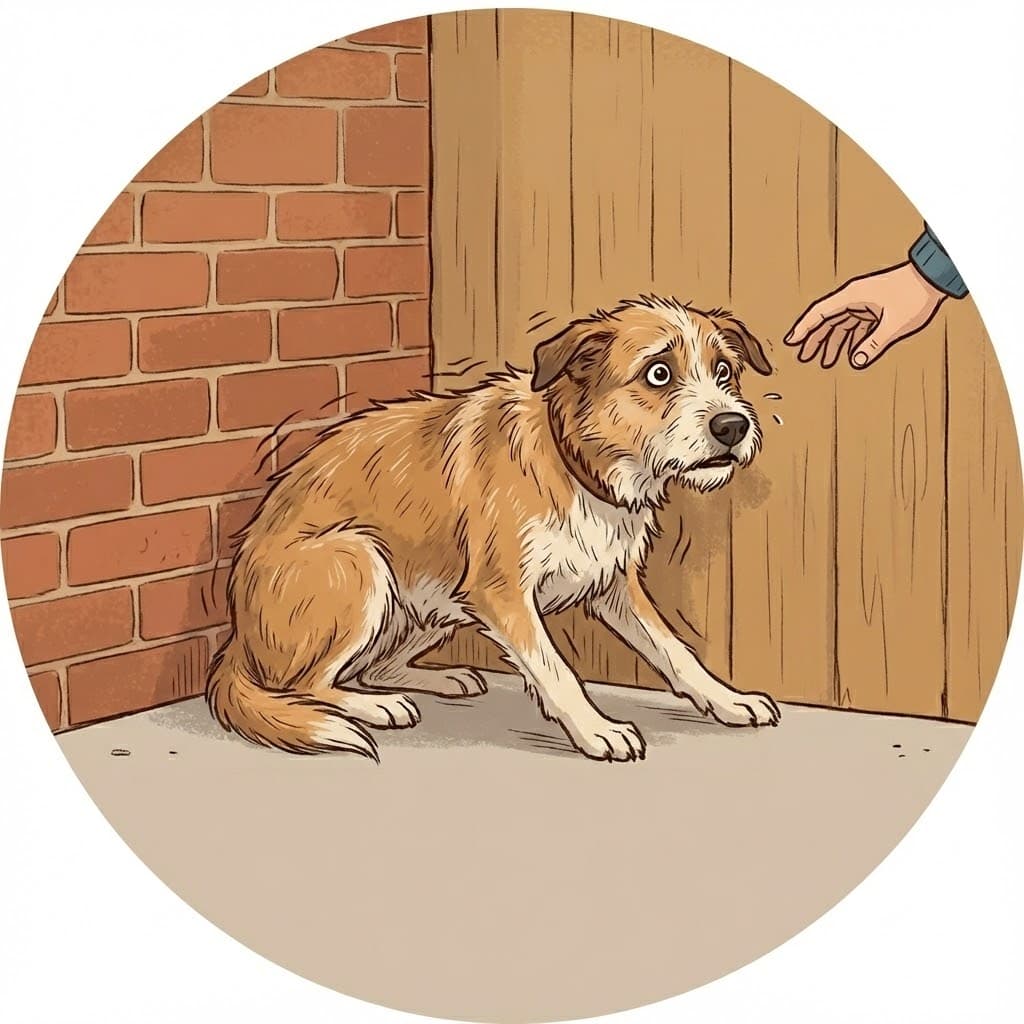
- Dilated pupils when anticipating separation or hearing triggers
- Excessive panting or drooling in non-exercise contexts
- Ears pinned back, tail tucked or rigid when alert
- Pacing, inability to settle into relaxed positions
- Excessive shedding during stress events
Behavioral Responses
- Shadowing behavior—following owner room to room
- Attention-demanding behaviors when owner tries to relax
- Destructive behavior focused on exit points (doors, windows)
- Excessive vocalization (barking, howling, whining) when alone
- Refusal to eat or settle when separated
The emotional truth: The core emotional state is chronic anxiety manifesting as hypervigilance and panic. This isn't simply "being nervous"—it's a dysregulated nervous system stuck in sympathetic activation (fight-or-flight).
How to Help: Training Approach
Systematic desensitization combined with counterconditioning (DS/CC) is the gold-standard approach. This involves gradual exposure to anxiety triggers at sub-threshold levels (low enough not to trigger panic) while pairing those triggers with positive experiences (food, play, calm reinforcement). The key is maintaining the dog below their anxiety threshold throughout training—any exposure that triggers panic sets progress back.
Key Techniques
What to Expect: Training Timeline
4 Weeks
Noticeable reduction in pre-departure anxiety. Your dog should tolerate 30-60 second departures without distress. Decreased reactivity to doorbell/knocking at practiced volume levels. Improved ability to settle on their mat/safe space for 5-10 minutes. Reduced shadowing behavior. These early wins build your confidence and your dog's confidence that the training protocol works.
12 Weeks
Ability to handle 30-minute to 1-hour absences without destructive behavior or excessive vocalization. Consistent calm behavior during doorbell triggers when trained protocols are followed. Significant reduction in hypervigilance—your dog can relax and nap when you're home. Visitors can enter the home with manageable initial excitement that settles within 5-10 minutes. Owners typically report feeling "normal" again—able to run errands, have guests, and live without constant guilt or anxiety about their dog.
24 Weeks
Your dog should handle routine absences (2-4 hours) with confidence. Environmental triggers produce minimal reactivity or quick recovery. The dog demonstrates self-soothing behaviors and seeks their safe space voluntarily when stressed. Separation anxiety has transformed into secure attachment—your dog is content alone because they trust you'll return. Maintenance training becomes minimal. The neural pathways of panic have been replaced with pathways of calm confidence. Many owners report their dog seems "younger" and more playful as chronic stress dissipates.
Progress Milestones to Watch For
Difficulty Level
challenging
Reactivity
85 → 25
Confidence
30 → 85
Not Sure If This Is Your Dog?
Take our free 2-minute quiz to discover your dog's exact behavioral archetype and get a personalized training recommendation.
Take the Free Quiz →