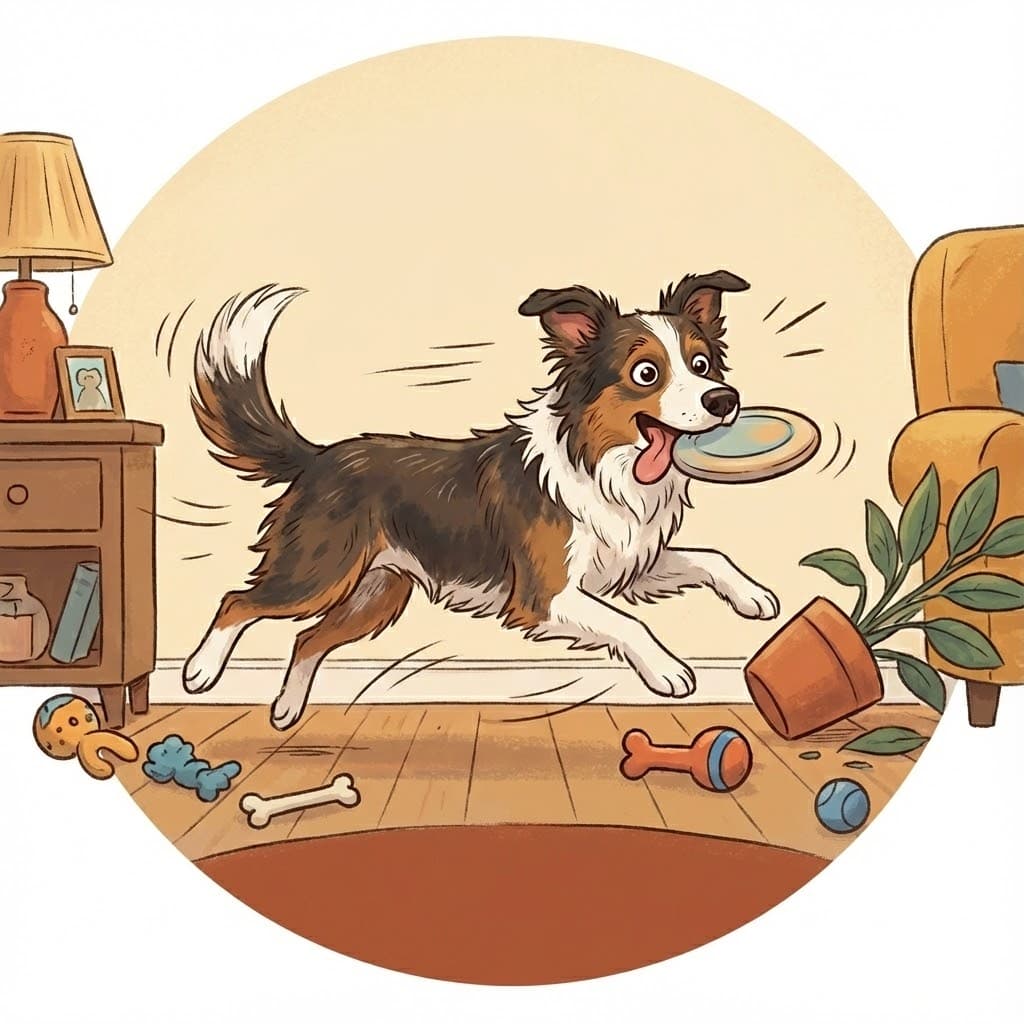
Dog Archetype
The Overstimulated Athlete
A smart, energetic dog without an outlet
Is This Your Dog? Take the Free QuizUnderstanding The Overstimulated Athlete
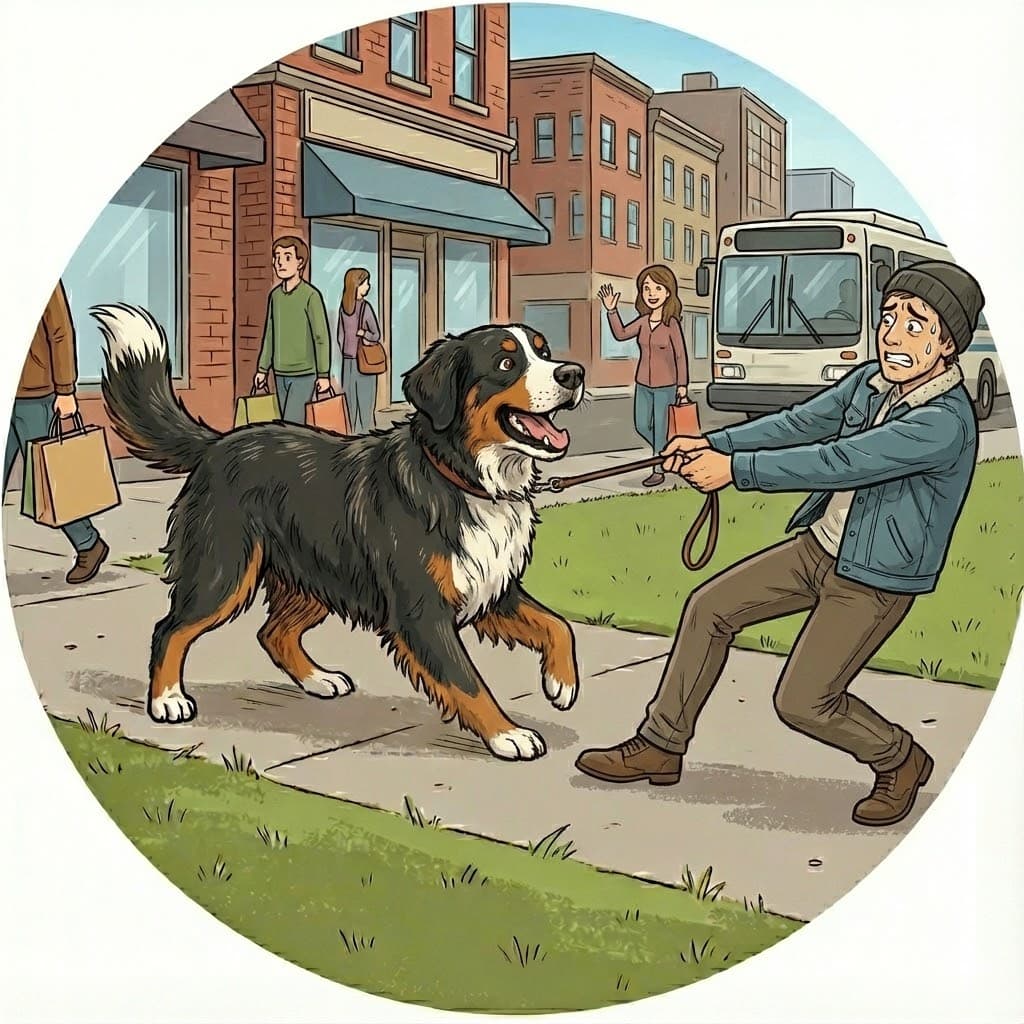
Your dog is a force of nature. Walks feel like you're water-skiing behind a speedboat. The moment another dog appears, your arm nearly dislocates as they lunge and pull with laser focus. Guests are greeted with full-body jumping that knocks over children and embarrasses you. After an hour at the dog park, they still have the "zoomies" at home, racing in circles and mouthing your hands when they want attention. Training? They know the commands—sit, down, stay—but only when nothing interesting is happening.
The moment there's a distraction, it's like you don't exist. You've heard "a tired dog is a good dog," but somehow more exercise just seems to create an athlete in better shape. Here's the truth that most owners miss: your dog isn't defiant or stupid. They're cognitively understimulated and haven't learned impulse control. This archetype is most common in working and sporting breeds—Border Collies, Australian Shepherds, Belgian Malinois, Retrievers, Pointers—dogs literally designed to work for 8-10 hours a day. Physical exercise alone cannot satisfy their brain's need for problem-solving and structure.
The leash pulling, the jumping, the inability to "turn off"—these are symptoms of arousal dysregulation and lack of impulse control training, not lack of exercise. The breakthrough comes when you shift from trying to exhaust them physically to teaching them to think, control their impulses, and find calm. Through structured training protocols that engage their working drive—scent work, impulse control games, trick training, and decompression routines—this raw intensity becomes channeled power. The same dog who dragged you down the street transforms into a focused partner who can heel past distractions, greet people politely, and actually settle on a mat when asked. The energy doesn't disappear—it gets directed. And that makes all the difference.
Signs Your Dog Is Overstimulated Athlete
Pulls hard on leash, making walks exhausting
Jumps on people (guests, strangers on walks)
Gets the "zoomies" frequently, even after exercise
Easily distracted—can't focus during training
Mouths/nips hands or clothing when excited
Barks or whines during high-energy moments
Struggles with impulse control (waits impatiently for food, toys)
What Triggers This Behavior?
- ⚡Seeing other dogs on walks (wants to play/engage)
- ⚡Guests arriving (excitement overload)
- ⚡Mealtime or treat time
- ⚡High-activity environments (parks, busy streets)
- ⚡Play sessions that ramp up too quickly
Why Dogs Become Overstimulated Athletes
🧬 Genetics & Breed
This archetype is overwhelmingly genetic. Working breeds (herding, sporting, guarding) were selectively bred for high energy, intense focus on stimuli, and rapid response to environmental triggers.
🏠 Environment
Modern pet homes provide inadequate mental stimulation for working breeds. The lack of structured jobs, insufficient impulse control training, and exercise routines that focus on quantity over quality (long runs that build endurance rather than calm) create a feedback loop of escalating arousal.
📖 Life Experience
Many of these dogs have learned that excitement and intensity get them what they want. If pulling on the leash means they reach the dog faster, they'll pull harder.
How to Spot It: Behavioral Markers
Physical Signs
- Hard, prolonged eye contact with triggers (intense staring)
- Rapid breathing and panting even without physical exertion
- Tense, rigid body posture when focused on stimulus
- High tail carriage, forward-leaning stance when excited
- Unable to sit or remain still for more than a few seconds
Behavioral Responses
- Leash pulling with full body weight, choking themselves
- Spinning, barking, or whining when they see triggers
- Jumping on people with full body engagement
- Grabbing leash, clothing, or hands with mouth when excited
- Difficulty transitioning from high-energy play to calm
The emotional truth: The core emotion is frustration-based arousal, not aggression. This is "I want to get to that thing and I can't!" rather than "I want to hurt that thing.
How to Help: Training Approach
Impulse control training combined with engagement-based positive reinforcement. This approach teaches the dog that calm, focused behavior earns access to rewards (including high-value activities like play or social interaction), while impulsive behavior (pulling, jumping) results in loss of access. The methodology leverages the dog's high drive as motivation rather than trying to suppress it.
Key Techniques
What to Expect: Training Timeline
4 Weeks
Noticeable improvement in basic impulse control around food and doorways. Your dog should reliably wait before meals and sit before going through doors. Reduced pulling on leash in low-distraction environments. Ability to settle on mat for 5-10 minutes. Decreased jumping frequency as it's no longer reinforced. These early wins prove to both you and your dog that control is possible and rewarding.
12 Weeks
Significant leash manners improvement—your dog should walk on loose leash for stretches in moderate-distraction environments and demonstrate quick recovery from pulling. Polite greetings with familiar visitors after initial excitement settles within 2-3 minutes. Consistent response to "settle" or "place" command even with moderate distractions. Improved focus during training sessions. The "zoomies" become less frequent as overall arousal regulation improves. Owners report walks are enjoyable again and feel confident managing their dog in public.
24 Weeks
Reliable loose-leash walking in high-distraction environments with occasional reminders. Your dog can pass other dogs on leash with focused disengagement rather than lunging. Polite greetings become automatic—guests can enter without jumping. Your dog demonstrates clear "on-off" toggle—can engage in intense play and then settle within 5 minutes when asked. Advanced impulse control is solid: reliable recalls from play, long-duration stays, and calm behavior around triggers that previously caused reactivity. The dog's energy is fully channeled into appropriate outlets, making them a genuine partner rather than a liability.
Progress Milestones to Watch For
Difficulty Level
moderate
Reactivity
75 → 30
Confidence
70 → 90
Not Sure If This Is Your Dog?
Take our free 2-minute quiz to discover your dog's exact behavioral archetype and get a personalized training recommendation.
Take the Free Quiz →